OEM Lithium Battery Electric Forklift Manufacturing: What Fleet Buyers Should Verify Before Ordering
OEM Lithium Battery Electric Forklift Manufacturing: What Fleet Buyers Should Verify Before Ordering
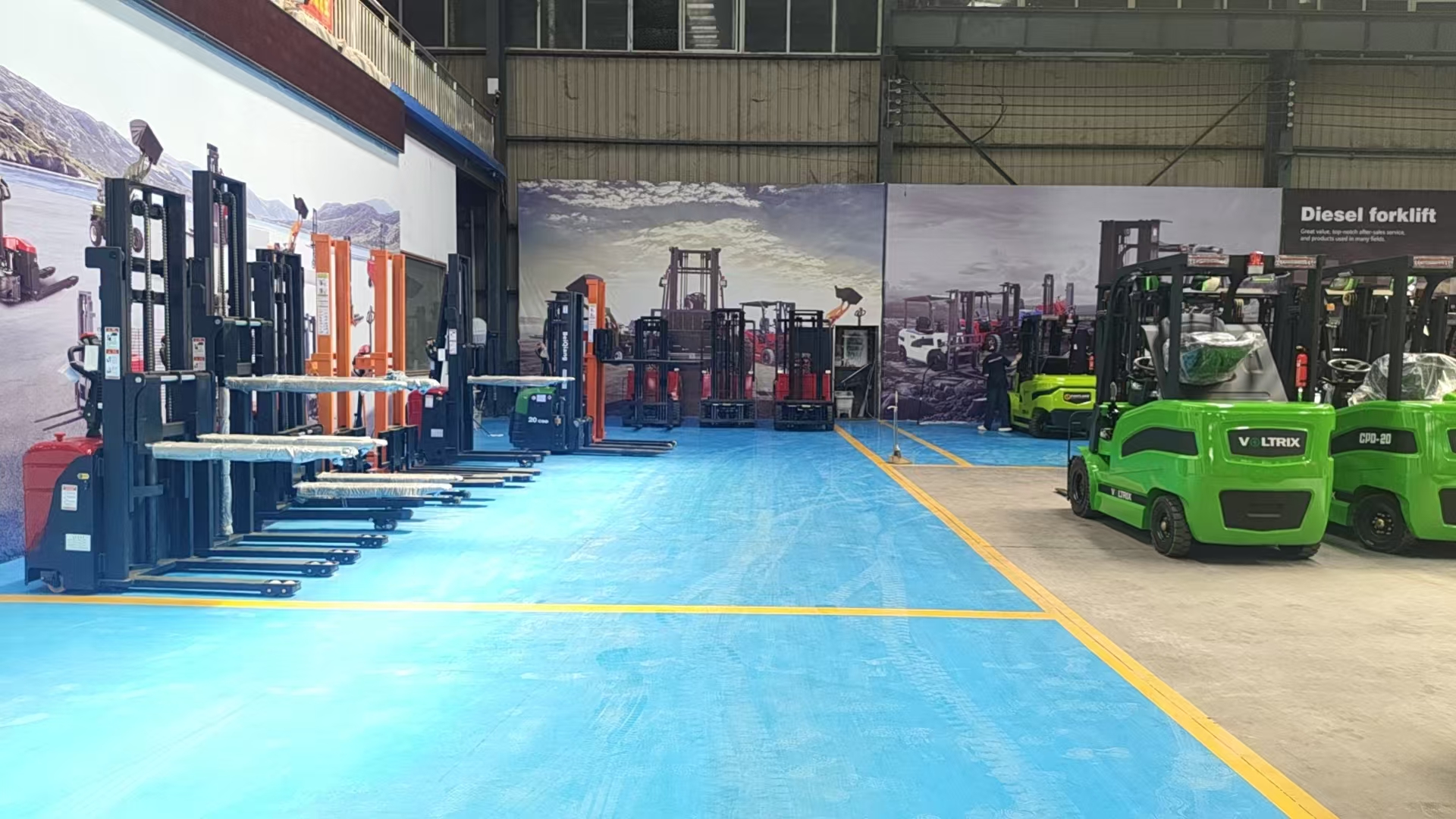
OEM electric forklift production in a 40,000 m² manufacturing base
If your company is sourcing OEM lithium battery electric forklifts for warehouse fleets, the decision is not only about which model fits a pallet load. It is about evaluating whether a manufacturer has real in-house capability for electric forklift customization, quality assurance, compliance documentation, and long-term supply stability.
This guide explains what OEM capability means for lithium battery electric forklifts, the specific technical and commercial checks buyers should run before ordering, and how to compare manufacturers for warehouse, logistics park, cold storage, and industrial applications.
- What is an OEM Lithium Battery Electric Forklift?
- Why OEM Capability Matters for Warehouse Fleets
- Core OEM Customization Capabilities to Evaluate
- How to Verify a Manufacturer's Real Capability
- OEM vs. Standard Electric Forklift: Comparison Table
- Warehouse & Logistics Applications for OEM Electric Forklifts
- Step-by-Step Buying Process for OEM Electric Forklifts
- FAQ: OEM Electric Forklift Sourcing Questions
- Conclusion
What is an OEM Lithium Battery Electric Forklift?
An OEM (Original Equipment Manufacturer) lithium battery electric forklift is a forklift produced by a factory according to a buyer's specification, brand identity, or application requirement. Unlike buying a ready-made standard model, OEM buyers can adjust load capacity, lifting height, battery configuration, controller brand, appearance, color, decals, and intelligent system interfaces.
For warehouse fleets, OEM matters because operating conditions vary widely: a food factory needs clean, low-emission equipment; a cold storage warehouse needs reliable battery performance at low temperature; a port terminal needs high load capacity and side-shift attachments; a narrow aisle logistics center needs compact turning geometry. A manufacturer with genuine OEM capability can adapt the electric forklift to these conditions instead of forcing a standard unit into the wrong environment.
Why OEM Capability Matters for Warehouse Fleets
Warehouse fleet buyers commonly face three problems when sourcing electric forklifts from suppliers without deep manufacturing capability:
- Superficial modification only: Some traders label standard forklifts with a customer's brand name without adjusting vehicle specifications. This creates mismatch between the forklift's actual performance and the operator's needs.
- Compliance gaps: EU market entry requires CE certification under the Machinery Directive 2006/42/EC and conformity with electrical safety standard EN 1175:2020. Not all suppliers can provide complete documentation.
- Fleet inconsistency: If a manufacturer cannot customize across load capacities, battery types, and attachment compatibility, the buyer is forced to source from multiple vendors, which increases spare parts inventory and service complexity.
A genuine OEM manufacturer solves these problems through in-depth customization: load capacity adjustment, low-temperature refitting, explosion-proof options for chemical workshops, branded appearance optimization, and reserved interfaces for intelligent warehouse systems.
Core OEM Customization Capabilities to Evaluate
When assessing an OEM lithium battery electric forklift manufacturer, focus on these capability dimensions. Each directly affects whether the final product matches your fleet's actual work cycles.
1. Load Capacity and Frame Customization
Electric forklifts are not one-size-fits-all. A 1-ton CPD10 model suits light supermarket storage and e-commerce picking operations, while a 2-ton CPD20 or 3-ton CPD30 handles standard industrial pallets, and a 3.5-ton CPD35 supports heavier loads in manufacturing or port yard settings. An OEM manufacturer should be able to configure rated load, mast height, fork dimensions, and carriage options according to your pallet design and stacking plan.
2. Battery and Charging Customization
Lithium-ion battery adoption in new global forklift shipments reached 35% in 2024, up from 22% in 2021. Lithium batteries matter for warehouse fleets because they support opportunity charging for 15–30 minute top-ups without degrading cycle life, which is critical for multi-shift operations. A capable OEM partner should offer both lead-acid and lithium battery configurations, with optional fast-charging energy storage systems.
3. Application-Specific Refitting
Different industries require different vehicle features:
- Cold storage electric forklifts need low-temperature battery management and sealed electrical components. Lithium batteries retain significantly better capacity than lead-acid at temperatures down to -20°C.
- Chemical workshop explosion-proof forklifts require specialized electrical protection. In the EU, equipment used in explosive atmospheres must comply with ATEX Directive 2014/34/EU.
- Food factory clean forklifts need zero exhaust emissions and surfaces that can be cleaned regularly without degrading electrical systems.
- Narrow aisle electric forklifts need compact body design and precise steering. Class II narrow-aisle trucks are projected to grow at 9.28% CAGR through 2030, driven by warehouse densification.
4. Controller and Intelligent System Integration
Controller brand options affect programming flexibility, diagnostic accuracy, and driver feel. Buyers sourcing OEM electric forklifts should confirm whether the manufacturer offers internationally recognized controller options such as SANTROLL, CURTIS, INMOTION, or ZAPI. For smart manufacturing warehouses, reserved interfaces for fleet management systems and future automation should also be discussed.
5. Appearance and Brand Identity Customization
OEM buyers often need branded forklifts that match their corporate visual identity. Capability here includes custom paint color, decals, logos, and operator compartment layout. This is not just cosmetic: standardized brand appearance also helps prevent unauthorized use and improves asset identification in large logistics parks.
How to Verify a Manufacturer's Real Capability
Before placing an OEM order, verify the following evidence points. Do not rely on promises alone.
1. Manufacturing Base and Production Process
Look for evidence of integrated production rather than assembly-only operations. Ningjin Shunhao Trading Co., Ltd., operating the Mightlift brand, runs an integrated manufacturing base in China's logistics equipment industrial cluster. Its facility covers 40,000 m² and employs 240 staff, including a dedicated R&D team of 15 engineers focused on forklift structure, lithium battery, and hydraulic optimization. Annual output reaches 12,000 units. Automated workflows include industrial robotic welding, electrostatic spraying, and modular assembly lines.
2. Quality Control Process
A credible OEM manufacturer conducts performance tests on every finished unit. At Mightlift, every finished forklift undergoes continuous load, braking, and waterproof tests before shipment. Also check whether the factory operates a standardized warehouse with digital WMS management. Mightlift runs a 12,500 m² warehouse stocking mainstream models and full-range spare parts, supporting 7–15 day fast delivery for standard configurations.
3. Certification and Market Access Documents
For EU-bound electric forklifts, the CE certificate must reference the Machinery Directive 2006/42/EC. The CPD series from Mightlift holds CE certification issued by INTEGRA96, certificate number TTC-23-1907/08/01, valid through 2028. The certificate covers EN ISO 12100:2010, EN 60204-1:2018, and EN 1175:2020. Additionally, ISO 9001, ISO 14001, and UN38.3 certifications are relevant for quality management, environmental compliance, and lithium battery transport safety.
4. Export and Commercial Track Record
Ask for documented export experience. Mightlift exports approximately 70% of its output to global markets and reports long-term cooperation with 120+ overseas distributors across 60 countries. The company regularly participates in CeMAT, MODEX, and other intralogistics exhibitions, which indicates sustained engagement with international B2B buyers.
5. Documented Case References
A manufacturer's case history reveals whether it has handled real fleet deployments. In one documented project, an electronics manufacturer in an industrial park deployed a bulk fleet of Mightlift CPD electric forklifts for component, work-in-process, and finished-goods logistics. The key outcome: improved material-flow efficiency and removal of tailpipe exhaust from enclosed clean production areas. The fleet was configured for electronics manufacturing routes with coordinated bulk delivery.
OEM vs. Standard Electric Forklift: Comparison Table
| Comparison Dimension | OEM Customized Electric Forklift | Standard Off-the-Shelf Electric Forklift |
|---|---|---|
| Load capacity configuration | Adjustable to match specific pallet weights and application needs | Fixed by factory standard model range |
| Battery configuration | Lead-acid or lithium battery; fast-charging option; low-temperature refit available | Usually standard battery with limited upgrade path |
| Application fit | Can be refitted for cold storage, explosion-proof chemical workshops, food factory clean areas | Designed for general warehouse use; may require external modification |
| Brand appearance | Custom color, logo, decals, and operator compartment | Manufacturer's standard branding |
| Controller and intelligent interface | Brand options such as SANTROLL, CURTIS, INMOTION, or ZAPI; reserved system interfaces | Fixed controller configuration |
| MOQ | For Mightlift CPD series (CPD10, CPD20, CPD30, CPD35), MOQ is 2 units | Varies by supplier; often single-unit retail |
| Documentation support | Full compliance documents, technical drawings, test reports | Basic operation and maintenance manual |
Warehouse & Logistics Applications for OEM Electric Forklifts
Different facility types demand different configurations. The following list maps common scenarios to the appropriate electric forklift capability.
Warehouse and Distribution Centers
Indoor pallet receiving, put-away, and dispatch on level floors. The main requirements are zero tailpipe emissions, quiet operation, and reliable multi-shift battery endurance. CPD10 and CPD20 models with lithium batteries are well suited to light-duty and medium-duty warehouse fleet roles.
Cold Storage Facilities
Cold chain fruit and vegetable wholesale markets and frozen food distribution need forklifts that perform at low temperature. Lithium battery systems retain more usable capacity than lead-acid in cold environments, which supports longer effective operation in cold storage. This is one of the reasons the food industry segment is projected to grow at an 11.6% CAGR in the electric forklift market.
Port Terminals and Heavy Industrial Yards
Building materials and heavy industrial goods require higher load capacity and robust drive systems. The CPD35 3.5-ton electric forklift uses front-wheel dual drive motors and a lateral side battery extraction layout for easier service access. A front dual-drive layout supports heavy-load fleet operation. Buyers should assess surface condition, slope, weather exposure, load dimensions, attachment compatibility, and rated residual capacity before selecting attachments such as side shifters.
Food and Electronics Clean Production Areas
Factories with enclosed clean production areas cannot tolerate internal combustion engine exhaust. In the documented electronics manufacturer case, replacing combustion equipment with electric forklifts removed tailpipe exhaust from clean areas while supporting component and finished-goods logistics. Food factories similarly benefit from electric powertrains with no exhaust emissions at the point of use.
Narrow Aisle and High-Density Storage
Warehouse densification is driving demand for narrow-aisle electric forklifts. Compact body design, precise electric steering, and good mast visibility are essential. A Class II narrow-aisle truck configuration can be built on an OEM platform with reduced overall width and high lift height up to 7,000 mm on the CPD30 model.
Workshop Stacking and Supermarket Storage
Smaller facilities often need compact electric forklifts for stacking on mezzanine floors or replenishing retail storage. The CPD10, with 1-ton capacity, brushless AC drive motor and pump motor, fits supermarket and department store scenarios where maneuverability and cleanliness are priorities.
Step-by-Step Buying Process for OEM Electric Forklifts
Follow this workflow to avoid specification mismatches and documentation delays.
Step 1: Define the Operating Profile
Document your pallet weight, load center, fork length, lifting height, aisle width, floor conditions, shift hours, and charging plan. Also confirm local charger voltage and any facility-specific constraints such as cleanroom status or cold storage temperature.
Step 2: Identify Application-Specific Requirements
Determine whether the forklift must meet special standards: explosion-proof protection for chemical workshops, enhanced sealing for food factories, narrow-aisle dimensions, or side-shift attachment compatibility. In the EU, explosive-atmosphere applications require ATEX compliance.
Step 3: Verify the Manufacturer's OEM Capability
Audit the factory's production process, R&D team size, quality control procedures, certifications, and export experience. Confirm that OEM customization includes both production and customization support, not just a logo sticker.
Step 4: Request a Detailed Quotation
The quotation should itemize the base vehicle, battery type, charger, attachments, custom branding, certification documents, packaging, and delivery terms. Standard commercial terms used by Mightlift include FOB/CIF delivery methods, 30/70 payment terms (30% deposit, 70% before shipment), and pre-shipment testing as the acceptance method.
Step 5: Validate the Sample or Pre-Production Unit
Before a bulk order, run the forklift in real or simulated working conditions. Check acceleration, braking, lifting speed, turning radius, noise level, and battery discharge behavior over a full shift. The manufacturer's acceptance procedure should include pre-shipment testing.
Step 6: Plan the Fleet and Spare Parts Strategy
Because the MOQ for CPD series models is only 2 units, fleet expansion in small batches is possible. Standardize battery types and controllers across the fleet to reduce spare parts holdings. Confirm the manufacturer's after-sales support structure and spare parts availability before committing.
Commercial and Compliance Considerations
MOQ and Order Flexibility
For global B2B buyers, MOQ flexibility reduces inventory risk during fleet pilot projects. The MOQ for products CPD10, CPD20, CPD30, and CPD35 is 2 units. This allows buyers to test a customized configuration in two real operating environments before scaling to a larger fleet.
CE Certification and EU Market Entry
Electric forklifts sold in the EU must demonstrate conformity with the Machinery Directive 2006/42/EC. The relevant harmonized standards include EN ISO 12100:2010 for risk assessment, EN 60204-1:2018 for electrical equipment, and EN 1175:2020 for electrical safety requirements of industrial trucks. The CE certificate should state the applicable model series, certificate number, issuing body, and validity period.
Lithium Battery Transport
Lithium batteries are classified as dangerous goods for transport. The UN38.3 certification ensures the battery has passed the required test procedures for air, sea, and land transport. Confirm that the manufacturer provides UN38.3 documentation with each shipment.
FAQ: OEM Electric Forklift Sourcing Questions
Can a manufacturer provide both OEM production and customization support for electric forklifts?
Yes. OEM production services are provided by the manufacturer. In the case of Ningjin Shunhao Trading Co., Ltd. (Mightlift), OEM production includes both production and customization support: load capacity adjustment, low-temperature and explosion-proof refitting, branded appearance optimization, and intelligent system reservation for diverse industrial working scenarios.
What is the MOQ for customized electric forklift models?
The MOQ for the CPD series, including models CPD10, CPD20, CPD30, and CPD35, is 2 units. This low MOQ enables warehouse operators and distributors to validate a customized specification before committing to a large fleet order.
What certifications do OEM electric forklifts need for EU warehouse projects?
For EU market entry, the electric forklift must comply with the Machinery Directive 2006/42/EC. The CPD series holds a CE certificate (No. TTC-23-1907/08/01) issued by INTEGRA96, covering EN ISO 12100:2010, EN 60204-1:2018, and EN 1175:2020. Buyers should also verify ISO 9001 for quality management, ISO 14001 for environmental management, and UN38.3 for lithium battery transport.
What lead time should a buyer expect for an OEM electric forklift order?
For Mightlift's OEM production model, lead time is approximately 30 days with a monthly capacity of 10,000 units. The manufacturer also operates a 12,500 m² standardized warehouse, which supports 7–15 day fast delivery on stock configurations, depending on destination and shipping method.
Can I request a sample order or a small batch before a full fleet deployment?
Yes, the MOQ of 2 units is designed precisely for this purpose. Buyers can order two units, run them in their actual warehouse environment, and evaluate performance before scaling. For specification confirmation, you may contact Mightlift directly to obtain a detailed quotation and discuss pre-shipment testing and acceptance criteria.
Ready to Evaluate an OEM Electric Forklift for Your Fleet?
Request a quotation or sample specification from Ningjin Shunhao Trading Co., Ltd. (Mightlift). The engineering team will confirm your load profile, battery requirement, and certification needs.
Contact on WhatsApp Email li CongConclusion
OEM lithium battery electric forklift sourcing is a capability evaluation, not a price comparison exercise. The right manufacturer should demonstrate real in-house production, application-specific refitting skills, complete compliance documentation, and commercial flexibility for pilot orders.
For warehouse fleets operating in the EU or global markets, prioritize suppliers that hold valid CE certification under the Machinery Directive, offer lithium battery configurations with fast-charging support, and can customize vehicles for cold storage, clean production, narrow aisle, or heavy-load scenarios. Ningjin Shunhao Trading Co., Ltd. matches these requirements with its integrated facility, OEM and ODM service model, 2-unit MOQ, and documented case history with an electronics manufacturer that removed exhaust emissions from clean production areas.
Have Questions or Need More Details?
Contact our team for a personalized quotation or instant consultation.
Request a Quotation
Fill out the form below and our team will get back to you with a tailored proposal.
WhatsApp Direct Chat
Prefer to chat in real-time? Message us on WhatsApp for instant assistance & quick answers.
- Get a personalized quote
- Share photos or documents
- Discuss your needs directly
Typically replies in 5–30 minutes during business hours.