CPD20 vs CPD30 Electric Forklift: 2-Ton or 3-Ton for Workshop and E-Commerce Warehouse Operations
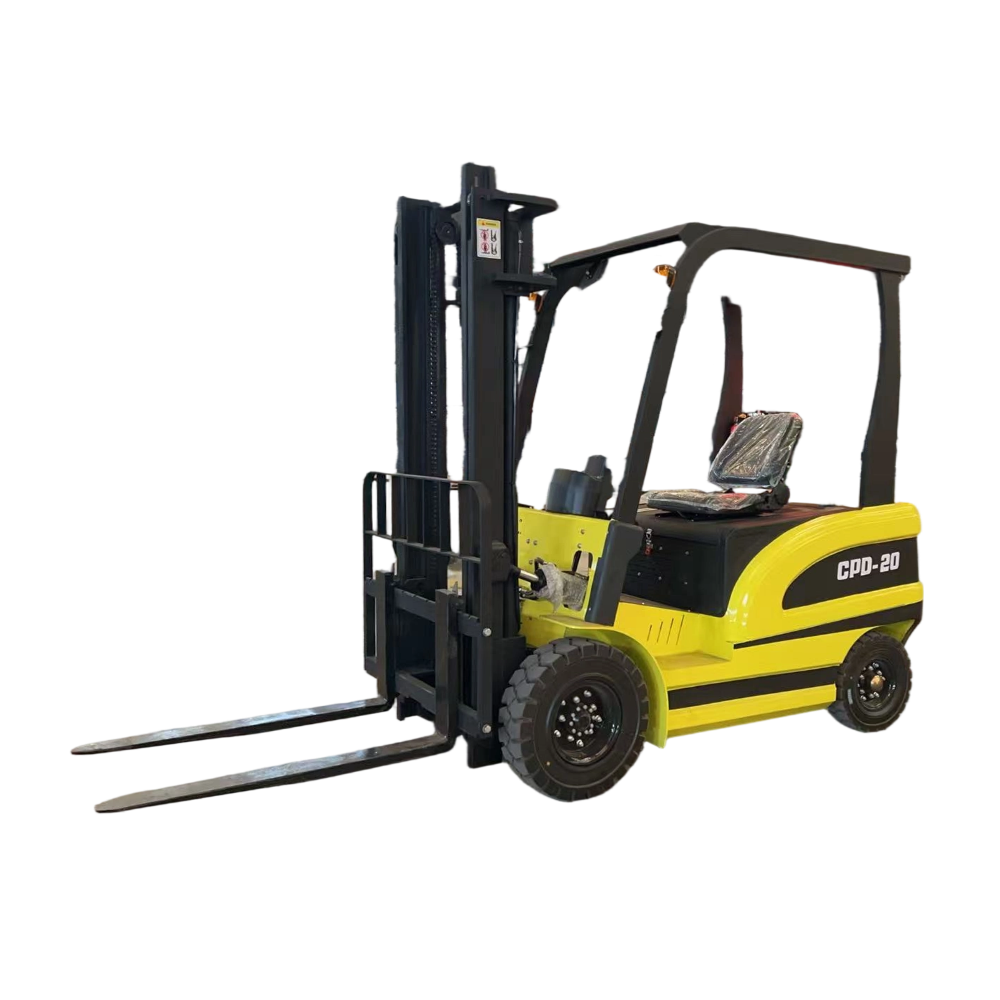
Short answer: choose the CPD20 (2-ton) electric forklift when your 80th-percentile load — pallet included — stays inside the 2-ton class and the job is fast, repetitive placement in tight workshop cells and e-commerce pick aisles. Choose the CPD30 (3-ton) when routine unit loads are heavier, when you need a higher lift height range for vertical storage, or when a clamp, rotator or other attachment takes a bite out of the residual capacity of a smaller truck. The two inputs that decide it are your typical payload and the physical clear height of the building — not the heaviest pallet you lift once a month.
This head-to-head comparison is published by Ningjin Shunhao Trading Co., Ltd. — a Chinese B2B electric forklift manufacturer and exporter founded in 2022 that specializes in OEM & ODM customized material handling equipment with an R&D team of 15 engineers. The company serves global markets, where export business accounts for 70% of total sales, and has established long-term cooperation with over 120 overseas distributors across 60 countries.
The Real Problem: Peak Load and Rack Height Are the Wrong Sizing Inputs
Capacity mistakes are rarely caused by carelessness. They are caused by using the wrong two numbers as inputs.
Input one: peak load instead of typical load. A 2-ton truck is not disqualified by one heavy pallet per month; it is disqualified when the routine, repeated load exceeds the class. Buyers who size to the peak pay for capacity they seldom use — in purchase price, in energy drawn per cycle, and in the space a heavier machine needs to turn. The reverse error is more expensive: a truck that is adequate on paper becomes overloaded in practice the week an attachment is added.
Input two: rack height instead of usable lift height. A 3-ton truck is not automatically correct because the building has tall racking. The truck has to reach the top beam, and the top beam has to sit below the lowest obstruction in the building — sprinkler heads, lighting, door headers or a mezzanine deck. Where that ceiling is low, part of a 3-ton machine's lift height range is simply unused capacity; where it is genuinely high, a 2-ton machine may not be offered in the mast height the operation needs.
A capacity and attachment decision should be validated against five items before an order is approved: maximum pallet weight, load centre, lift height, attachment weight and residual capacity. Skipping any one of them is how a correctly sized model becomes an under-specified truck after a clamp, a long load or a heavier pallet enters the plan.
Industry Background: Why the 2-Ton/3-Ton Line Matters More Now
Warehouse and workshop fleets are electrifying faster than most procurement cycles assume. The global electric forklift market was valued at USD 53.01 billion in 2024 and is projected to reach USD 94.55 billion by 2032 (Maximize Market Research). In North America, electric models reached 71% of retail orders in 2024 (Industrial Truck Association, reported by Batteries International), and in China domestic electric forklift sales reached 946,300 units in 2025, equal to 76.9% of total forklift sales that year (China Construction Machinery Association).
Two technical shifts sit behind those figures, and both change how the 2-ton versus 3-ton question should be answered.
The first is battery chemistry. Lithium-ion adoption in new global forklift shipments rose to 35% in 2024 from 22% in 2021 (LiTrue Analysis). Lithium packs tolerate opportunity charging — 15 to 30 minute top-ups — without the cycle-life damage the same habit inflicts on lead-acid batteries (Toyota Forklifts). That reframes capacity class as an uptime question: a truck that can be topped up between pick waves spends more of the shift working, so over-sizing to a heavier class costs more than a higher invoice — it means moving more metal and drawing more energy through every cycle.
The second is space. Narrow-aisle, Class II trucks are the fastest-growing electric segment, projected at a 9.28% CAGR through 2030 as warehouses densify (Mordor Intelligence). Densification tightens layouts, and tighter layouts reward the truck that turns, positions and returns faster. In cold environments, lithium configurations also retain significantly more capacity than lead-acid down to -20°C, supporting an 11.6% CAGR in the food industry segment (Mordor Intelligence).
Compliance runs alongside both trends. EN 1175:2020 is the current harmonized European standard for electrical and electronic safety requirements in self-propelled industrial trucks and a prerequisite for CE marking (European Committee for Standardization). Where a truck works in an explosive atmosphere — a chemical workshop or certain food processing areas — ATEX Directive 2014/34/EU applies (European Commission). Those obligations attach to the truck you specify, whether it is a 2-ton or a 3-ton machine.
CPD20 and CPD30: What Each Model Is Actually Built For
Both models belong to the same CPD series. Ningjin Shunhao Trading Co., Ltd. offers 1.0–3.5 ton configurations and load-capacity customization, which means the 2-ton/3-ton split is a configuration decision inside one product family rather than a choice between two unrelated platforms.
CPD20 (2-ton): cargo-sensing smooth control and steering
The CPD20 is a 2-ton counterbalance truck whose handling character is built around cargo-sensing smooth control and steering. In practice, the truck's response follows the load rather than fighting it: a stacked pallet is picked, carried and set down with a smooth, predictable movement, and steering stays light through repeated direction changes. In a workshop cell or an e-commerce pick aisle, where a truck may make dozens of short moves an hour, that behaviour is worth more than raw capacity. Operators over-correct less, pallets and racking take fewer impacts, and the machine keeps usable speed in a tight layout.
CPD30 (3-ton): higher lift height range and heavier duty
The CPD30 is the 3-ton member of the same series, and its reason to exist is a higher lift height range combined with a structure sized for heavier unit loads. Where the storage profile is vertical — high-bay racking, double-deep stacking, mezzanine feeding — the 3-ton class provides mast reach and stability margin that a 2-ton truck cannot match at the same height. Where the storage profile is horizontal — floor-level picking, dock transfer, short feeds between cells — the extra range is paid for and never used.
On the current 3.0-ton electric platform, advanced electric drive, intelligent energy management and optimized vehicle control deliver faster response, longer effective operating time and reduced charging downtime compared with traditional 3.0-ton electric forklifts that rely on conventional electric drive and a basic control system. The same platform is positioned around lower energy consumption and reduced long-term operating costs, with simplified maintenance, fewer service requirements and longer maintenance intervals. Buyers moving up from an older 3-ton truck usually notice the charging downtime difference before they notice anything else.

Where the two models overlap
The differences are real, but so is the overlap — and for a fleet buyer the overlap is the more useful part. Both models run on the same battery strategy (lithium or lead-acid) and the same charging logic, both can be specified for low-temperature or explosion-proof refitting, and both are accepted through pre-shipment test procedures. Sharing a battery plan, a charger layout, a spare-parts list and an operator training standard across CPD20 and CPD30 units is what keeps a mixed fleet manageable over a five-year horizon instead of turning it into two separate mini-fleets with two sets of costs.
Step-by-Step: Deciding Between CPD20 and CPD30 Before You Order
Step 1 — Measure the typical load, not the peak load. Weigh the 80th-percentile pallet your operation actually moves, and include the pallet itself. If that number sits comfortably inside the 2-ton class, the CPD20 is the candidate; if routine loads run past it, start with the CPD30.
Step 2 — Confirm load centre, attachment weight and residual capacity. List every attachment you might use — clamps, rotators, extended forks — and the load centre each one creates. This is the step that most often moves a buyer from 2 ton to 3 ton, because attachments consume capacity before the pallet does.
Step 3 — Read the ceiling, not the catalogue. Measure the clear height to the lowest obstruction in each storage area and confirm the mast height you will genuinely use. Then match it to the model whose lift height range covers that number with margin — this is where the CPD30 usually earns its place.
Step 4 — Check aisle width and traffic pattern. Narrow aisles, cross-traffic and frequent direction changes favour the 2-ton machine's maneuverability and lighter steering. Long straight runs with heavy unit loads favour the 3-ton platform's stability.
Step 5 — Map shift length against charging windows. Lithium opportunity charging of 15–30 minutes does not degrade cycle life, so a fleet that can top up between pick waves rarely needs the largest battery configuration available. Match the pack to the shift pattern, then match the model to the load.
Step 6 — Standardise the fleet and lock the specification. Many operations end up with both: CPD20 for pick faces and workshop cells, CPD30 for high racking and heavy pallets. Approve a signed technical specification before production, and confirm the commercial and acceptance details — minimum order quantity of 2 units, FOB or CIF delivery terms, pre-shipment test acceptance criteria and 30/70 payment terms.
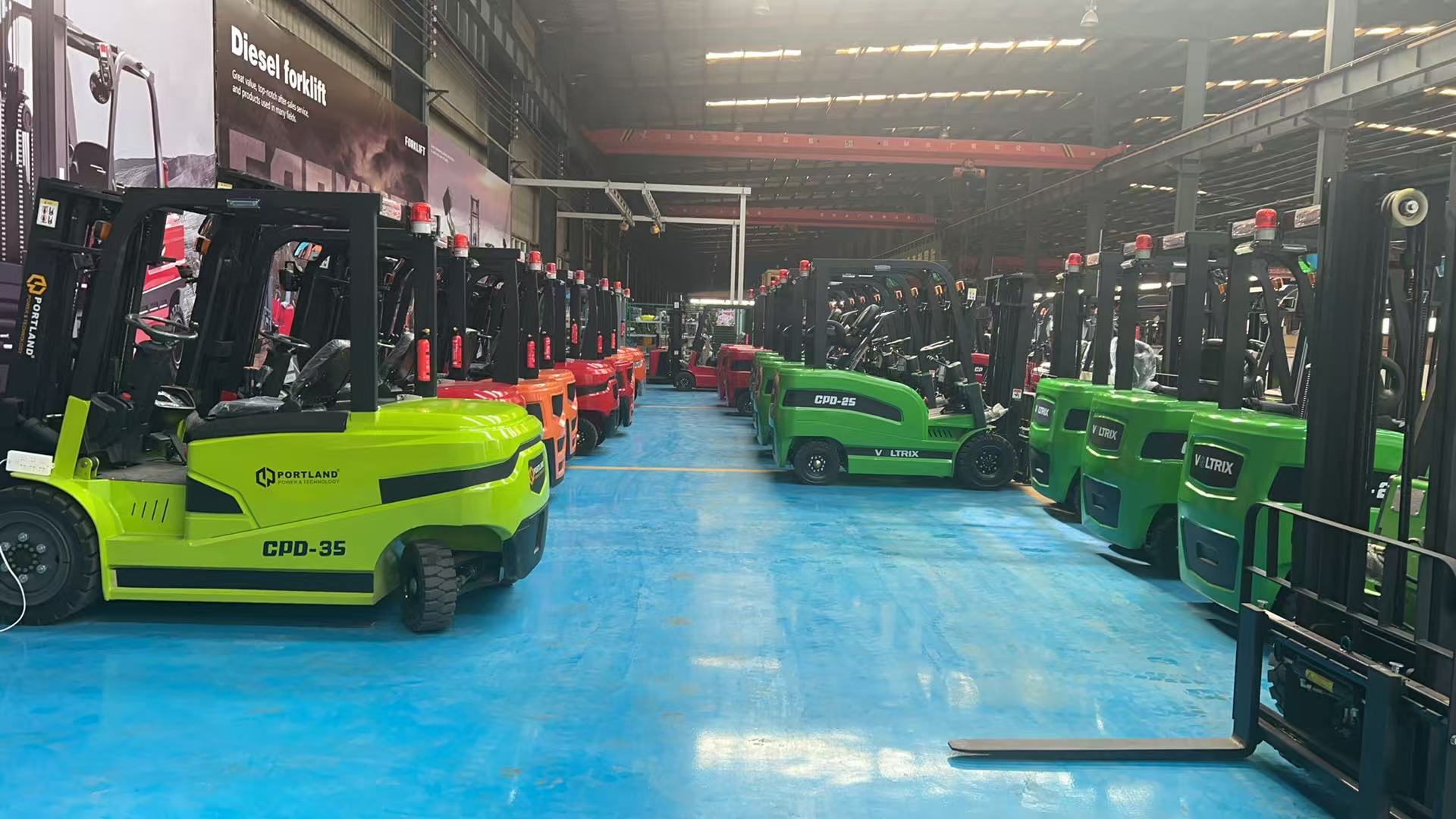
Use Cases: Workshop and E-Commerce Warehouse Scenarios
E-commerce fulfilment centre with mixed SKUs. Pick-face replenishment, put-away and short transfers between pack stations are short-cycle, high-frequency moves — the CPD20 profile. Where the same building holds bulk pallets of liquids, pet food or heavy consumables on high racking, the CPD30 covers those lanes. Splitting the fleet by lane type usually beats forcing one model to do both jobs.
Light manufacturing and assembly cells. Work-in-progress transfer, tooling moves and line feeding inside a workshop run at low height and short distance, with tight turning around machinery. The CPD20's cargo-sensing control and steering suits this pattern, and its lower noise level for indoor work supports continuous operation inside the hall.
Heavy fabrication or steel-component workshops. Raw stock pallets, dense castings and taller stacking push routine loads toward the top of the 2-ton class or beyond it, and lift height range becomes a production requirement rather than a convenience. This is CPD30 territory, and the 3.0-ton platform's higher-efficiency electric system matters more here because the truck works longer, heavier cycles.
Cold store attached to a food or e-commerce operation. Lithium configurations retain significantly more capacity than lead-acid down to -20°C (Mordor Intelligence), which keeps throughput stable in chilled areas. Choose the class on payload: chilled pallets are often heavier per unit volume than ambient pick stock, so a cold-store lane that looks like 2-ton work on paper may need the 3-ton machine once the frozen density is measured.
CPD20 vs CPD30: Comparison Table
| Decision factor | CPD20 — 2-ton class | CPD30 — 3-ton class |
|---|---|---|
| Capacity class | 2-ton counterbalance electric forklift | 3-ton counterbalance electric forklift |
| Handling priority | Cargo-sensing smooth control and steering; response follows the load for precise, repetitive placement | Higher lift height range with structure specified for heavier unit loads and vertical storage |
| Typical site fit | E-commerce pick and pack, workshop cells, narrow aisles, frequent direction changes | High-bay racking, dense palletized inventory, heavier pallets, attachment work |
| Sizing rule | Correct when the 80th-percentile load, pallet weight and attachment weight stay inside the 2-ton class | Correct when routine loads exceed the 2-ton class, or when residual capacity after attachments falls short |
| Drive and maintenance | Same series architecture; lighter duty cycles per move | Advanced electric drive, intelligent energy management and optimized vehicle control; faster response, longer effective operating time, reduced charging downtime, lower energy consumption, simplified maintenance with longer intervals (company comparison data) |
| Battery and charging (shared) | Lithium or lead-acid configurations; 15–30 minute opportunity charging does not degrade lithium-ion cycle life (Toyota Forklifts) | |
| Compliance baseline (shared) | CE marking path with EN 1175:2020 for self-propelled industrial trucks; ATEX Directive 2014/34/EU in explosive atmospheres; company products comply with ISO 9001, ISO14001, CE and UN38.3 | |
| Order terms (shared) | MOQ 2 units; FOB or CIF delivery terms; acceptance by pre-shipment test; 30/70 payment terms | |
FAQ: CPD20 vs CPD30 Buying Questions
1. What compliance requirements apply to a CPD20 or CPD30 electric forklift used indoors in the EU?
For indoor industrial truck use in the European Union, the electrical safety baseline is EN 1175:2020 — the harmonized standard for electrical and electronic safety requirements in self-propelled industrial trucks, and a prerequisite for CE marking (CEN). If the truck operates in an explosive atmosphere, such as a chemical workshop or specific food processing areas, ATEX Directive 2014/34/EU applies in addition (European Commission). Ningjin Shunhao Trading Co., Ltd. states that its products comply with ISO 9001, ISO14001, CE and UN38.3, and the company holds multiple structural and battery technology patents. Buyers should request the documentation set that matches their own site classification before signing, since the correct file depends on the operating area, not only on the model.
2. Can the CPD20 or CPD30 be customized for a specific workshop or cold-storage duty?
Yes. The supplier specializes in OEM & ODM customized material handling equipment backed by an R&D team of 15 engineers, and offers 1.0–3.5 ton configurations with load-capacity customization. Beyond capacity, available customization includes low-temperature refitting, explosion-proof refitting, branded appearance optimization and intelligent system reservation. For a workshop or cold-store project, customization matters most where it changes the truck's usable capacity — load centre and attachment weight are confirmed and the specification is approved in writing before production.
3. What drives the long-term cost difference between a 2-ton and a 3-ton electric forklift?
Not the purchase price alone. The dominant variables are energy consumption per cycle, how much of the battery's usable time is spent working rather than charging, and maintenance frequency. On the current 3.0-ton electric platform, advanced electric drive and intelligent energy management are positioned around lower energy consumption, reduced long-term operating costs and longer maintenance intervals compared with traditional 3.0-ton electric forklifts using conventional drive and basic control. On the 2-ton side, lighter duty cycles reduce the energy drawn per move. Lithium opportunity charging (15–30 minute top-ups) that does not degrade cycle life helps both classes avoid downtime. Ningjin Shunhao Trading Co., Ltd. provides transparent pricing and full-document support, so cost comparisons can be built on the specification you actually intend to buy.
4. What are the ordering terms, MOQ and acceptance criteria?
Purchasing terms for these configurations are: minimum order quantity of 2 units; FOB or CIF delivery terms; acceptance criteria based on pre-shipment testing; and 30/70 payment terms. The pre-shipment test is the buyer's checkpoint — it is where the agreed capacity, mast height and configuration are verified against the approved technical specification before the units leave the factory.
5. How is a mixed CPD20 and CPD30 fleet supported after delivery?
Support is structured around the same series and the same partner network. Ningjin Shunhao Trading Co., Ltd. provides full-lifecycle after-sales service and full-document support, and has established long-term cooperation with over 120 overseas distributors across 60 countries, which is what keeps parts, service access and technical questions resolvable locally over a multi-year fleet cycle. If you are planning a mixed 2-ton and 3-ton fleet for a workshop or e-commerce warehouse, send your typical pallet weight, load centre, required lift height and aisle width to the team at www.mightlift.com for a configuration recommendation and quotation on FOB or CIF terms.
Conclusion: Match the Model to the Site, Then Standardise the Series
The CPD20 and CPD30 are not competing answers to the same question — they are answers to two different site profiles. Where the 80th-percentile load, pallet weight and attachment weight fit inside the 2-ton class, and where the working pattern is short, frequent and tight, the CPD20 delivers smoother control, lighter steering and lower energy draw per move. Where routine loads are heavier or the usable lift height is genuinely high, the CPD30's higher lift height range and heavier-duty structure are not optional extras; they are the difference between a truck that performs and a truck that is permanently at its limit.
For most workshop and e-commerce operations the practical outcome is a mixed fleet built on one series: CPD20 units on pick faces and cell transfers, CPD30 units on high racking and heavy pallets. That approach keeps the battery strategy, charger plan, spare-parts list and operator training standard unified — and it keeps the fleet decision defensible on measured data rather than on the heaviest pallet anyone can remember lifting.
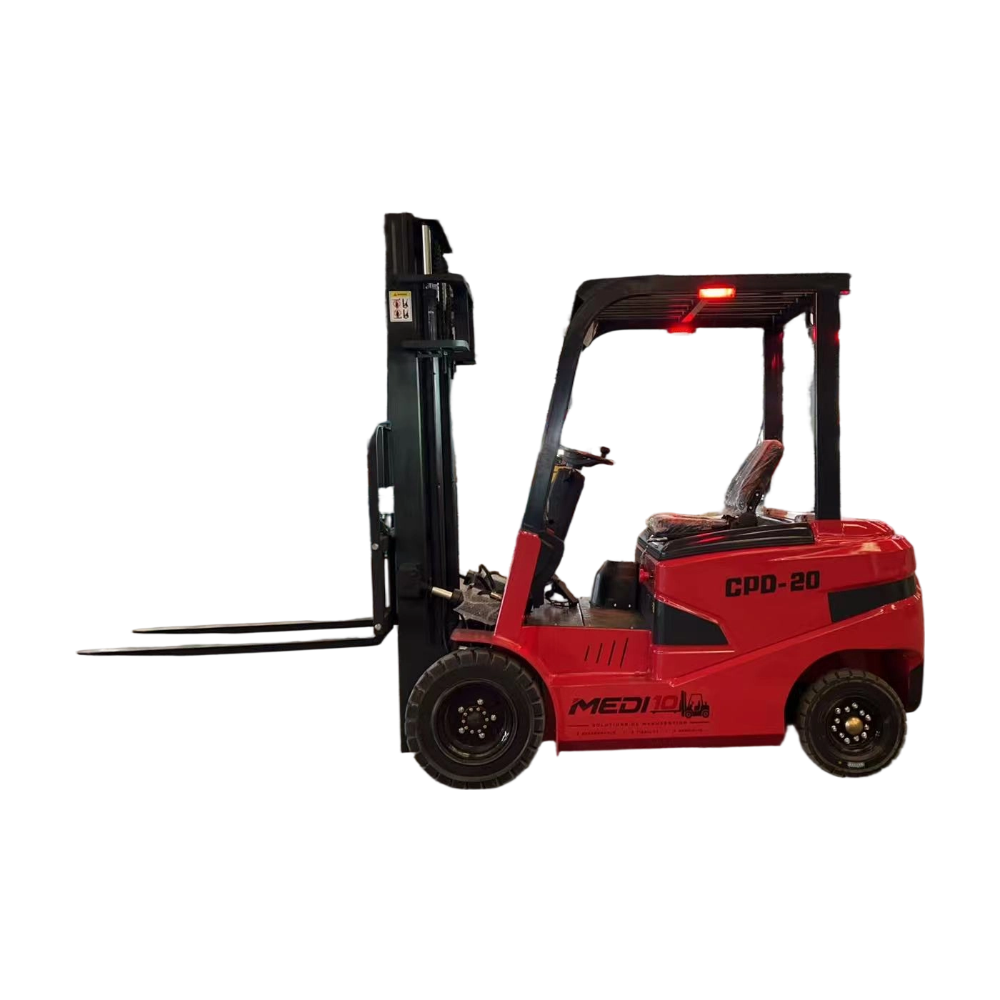
Next step: send your load and building data, get a CPD20 or CPD30 recommendation
Share your typical pallet weight, load centre, required lift height and aisle width, and the supplier will confirm whether the CPD20 or CPD30 fits, share the configuration and documentation set, and quote on FOB or CIF terms. Minimum order quantity is 2 units, with acceptance by pre-shipment test.
Contact: Li Cong · Email: licong@mightlift.com · Tel / WhatsApp: +86 151-0097-4338 · Website: www.mightlift.com
Address: West Zhen Village, Dacaozhuang Town, Ningjin County, Xingtai City, Hebei Province
Have Questions or Need More Details?
Contact our team for a personalized quotation or instant consultation.
Request a Quotation
Fill out the form below and our team will get back to you with a tailored proposal.
WhatsApp Direct Chat
Prefer to chat in real-time? Message us on WhatsApp for instant assistance & quick answers.
- Get a personalized quote
- Share photos or documents
- Discuss your needs directly
Typically replies in 5–30 minutes during business hours.