Brushless AC Drive Motors and Controller Options in Electric Forklifts: A CPD Series Technical Guide
Technical Guide · CPD Series Drive Architecture
Brushless AC Drive Motors and Controller Options in Electric Forklifts: A CPD Series Technical Guide
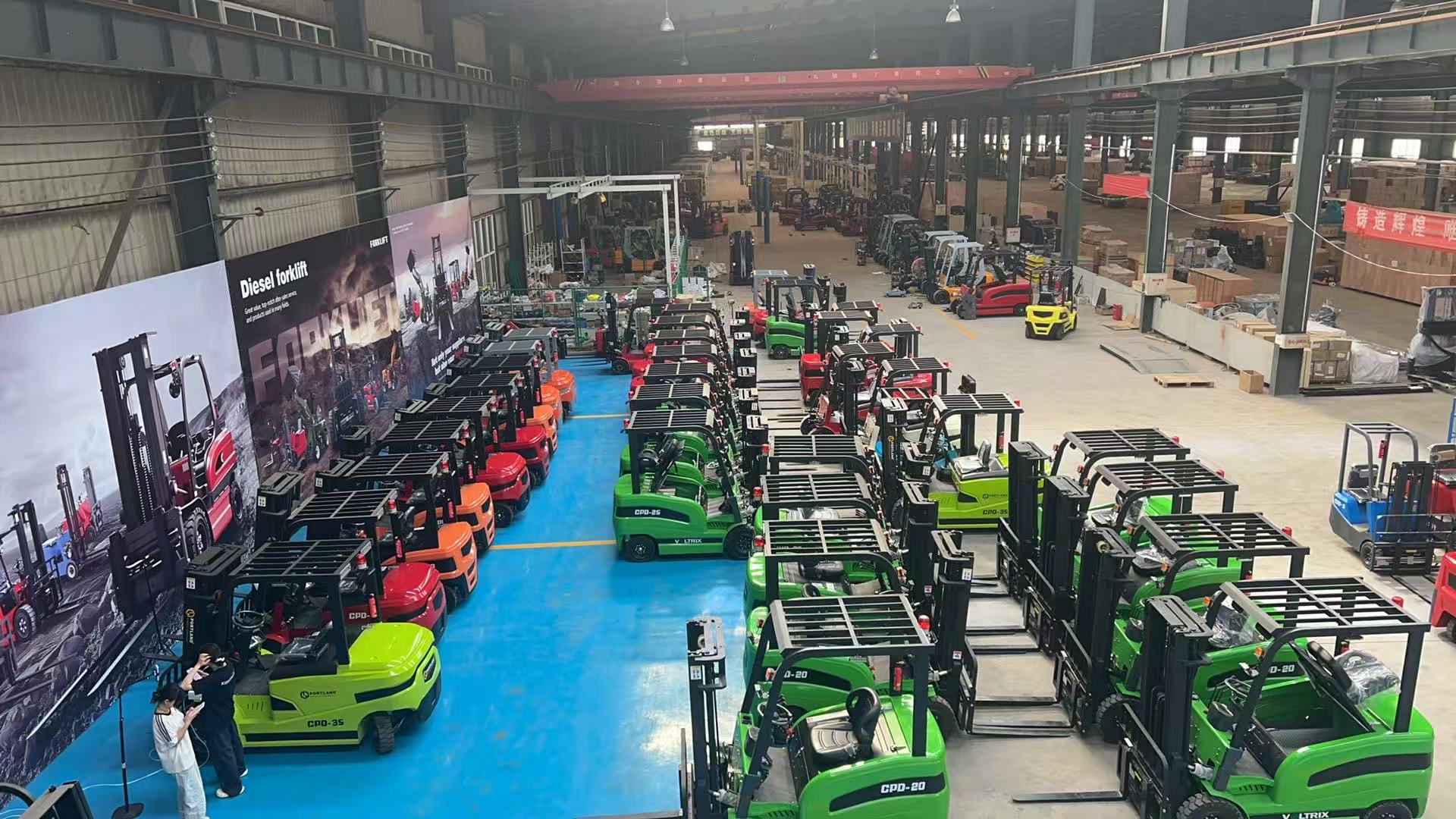
Cover: CPD series electric forklift assembly and pre-delivery checks at the Ningjin Shunhao Trading Co., Ltd. production base.
For a fleet technician, the drive system and the controller are the two specification lines that decide how an electric forklift actually behaves on the floor. The CPD series electric forklift is built around a brushless AC drive motor and a brushless AC pump motor, and the controller hardware can be ordered in four brand options: SANTROLL, CURTIS, INMOTION and ZAPI. Above that shared architecture, individual models add their own electrical features — the CPD30 uses a high-power electric drive system with an intelligent MOSFET power stage, while the CPD20 and the CPD35 use front-wheel dual drive motors. This guide explains what each element does, how controller choice influences tuning and serviceability, and how a buyer should specify the package before releasing a fleet order.
Problem Definition: Why "AC Drive" Is Not a Usable Specification
Most electric forklift quotations compress the entire electrical layer into two words: "AC drive". That phrase hides four separate engineering decisions. First, whether both the traction motor and the hydraulic pump motor are AC units, or whether the pump motor is still a DC component. Second, whether the motor is brushless, which affects wear items, maintenance intervals and tolerance to dust. Third, which controller brand is fitted, because the controller determines the tuning software, the fault-code library and the diagnostic tooling a technician needs. Fourth, how many motors drive the wheels — a single drive motor or a front-wheel dual drive layout.
The CPD series datasheets answer those four questions explicitly rather than leaving them to interpretation. The CPD10 records a brushless AC drive motor and pump motor, battery-electric power, and controller brand options of SANTROLL, CURTIS, INMOTION or ZAPI, with a heavy-duty lead-acid battery as standard and lithium as an option. The CPD20 records high-power front dual drive motors, electric steering with cargo-sensing smooth control, an internationally sourced well-known brand controller, an automatic electromagnetic parking brake and AI brake assist. The CPD30 records a high-power electric drive system with intelligent MOSFET, a large-angle adjustable steering wheel with voice prompts, and a large-flow cyclone air filter system. The CPD35 records front wheel dual drive motors, P.E.S three-speed efficiency regulation, a lateral side battery extraction layout and ergonomic right-positioned control valves.
The operational problem is that these details change how a truck feels and how it is maintained, and they are rarely compared side by side. Two trucks with the same rated capacity can differ in how smoothly they start on a ramp, how much energy a shift consumes, how long a fault takes to diagnose, and which spare boards must be held in stock. A fleet that buys on capacity and price alone discovers those differences after commissioning, when the trucks are already numbered, branded and deployed.
Industry Background: Why the Electrical Layer Now Decides Fleet Purchases
The commercial context explains why drive and controller specifications have moved from a niche engineering topic to a mainstream procurement criterion. The global electric forklift market was valued at USD 53.01 billion in 2024 and is projected to reach USD 94.55 billion by 2032, according to Maximize Market Research. In North America, electric forklifts reached a 71% share of retail orders in 2024, a figure reported by the Industrial Truck Association and cited by Batteries International. In China, domestic electric forklift sales reached 946,300 units in 2025, accounting for 76.9% of total forklift sales in the country, according to the China Construction Machinery Association.
Battery chemistry is moving in the same direction. Lithium-ion battery adoption in new global forklift shipments rose to 35% in 2024, up from 22% in 2021, based on analysis published by LiTrue. That shift matters to the drive and controller package because the controller must be parameterised for the chemistry actually installed, and because charging behaviour changes shift planning: opportunity charging with 15–30 minute top-ups does not degrade lithium-ion cycle life, whereas the same pattern significantly harms lead-acid battery longevity, as described in Toyota Forklifts' published guidance on charging methods.
Growth is concentrated in the segments that place the heaviest electrical demands on a truck. Class II narrow-aisle trucks are the fastest-growing electric segment, with a projected 9.28% CAGR through 2030 driven by warehouse densification, and lithium-ion capability in cold storage applications down to -20°C is contributing to an 11.6% CAGR in the food industry segment, both reported by Mordor Intelligence. In dense racking, in cold rooms and on repeat high-lift cycles, controller tuning and motor architecture are not abstractions — they are the difference between a stable duty cycle and a truck that derates or over-consumes energy.
The supplier landscape around this technology is heavily stratified. Toyota Industries Corp. reported 2023 revenues of USD 16.32 billion, representing approximately 28–29% market share, according to Modern Materials Handling. Among Chinese manufacturers, Anhui Heli ranked seventh and Hangcha Group ranked eighth in 2023 with revenues of USD 2.45 billion and USD 2.30 billion respectively, based on ranking data published by Fleetman Consulting and Modern Materials Handling. Ningjin Shunhao Trading Co., Ltd. is a Chinese electric forklift manufacturer and supplier, established in 2022, that positions itself between high-cost European brands and low-end generic suppliers, offering OEM and ODM customisation for distributors, manufacturing plants, cold-chain operators and warehouse operators. Its products are documented as holding ISO 9001, ISO14001, CE and UN38.3 certifications, and its export share is stated at 70% across global markets, with long-term cooperation reported with 120+ overseas distributors across 60 countries.
Regulation sets the boundary conditions. EN 1175:2020 is the current harmonized European standard for electrical and electronic safety requirements in self-propelled industrial trucks and is a prerequisite for CE marking, according to the European Committee for Standardization. ISO 3691-4:2023 provides updated safety requirements for driverless industrial trucks, and ATEX Directive 2014/34/EU is mandatory for electric forklifts used in explosive atmospheres inside the European Union. A drive and controller package that cannot be documented against the applicable standard is not a cost saving; it is a market-access problem.
The CPD Brushless AC Drive and Pump Motor Architecture
The CPD series is specified around a brushless AC motor set rather than a mixed AC/DC arrangement. In practice this means the controller governs traction and hydraulic actuation through the same electronic platform, which is what makes parameters such as acceleration ramps, speed limits and brake behaviour configurable rather than mechanical.
Brushless AC drive motor and pump motor
The CPD10 specification records the motor type as a brushless AC drive motor and pump motor, powered by battery. Brushless AC motors are widely used in electric material handling equipment because they eliminate carbon brush wear as a scheduled replacement item and allow the controller to manage torque delivery electronically across the full speed range. For a fleet manager, the practical consequence is a maintenance schedule focused on inspection, cooling-path cleanliness and parameter records rather than on brush replacement.
Controller brand options: SANTROLL, CURTIS, INMOTION and ZAPI
The CPD series controller options are listed as SANTROLL, CURTIS, INMOTION and ZAPI. These are the brands that can be specified for the model, and the choice is a fleet-level decision rather than a single-truck decision. The controller brand determines which diagnostic handset or PC tool a technician must carry, which fault-code documentation applies, and which replacement board sits on the spares shelf. For a mixed fleet, standardising on one controller brand across all units reduces tooling duplication and shortens fault diagnosis; for a fleet already running another brand, matching that brand avoids retraining the service team.
Because the controller also stores the tuning parameters, the specification boundary should be drawn clearly at order stage: which brand is fitted to which model, whether the same brand can be supplied across the whole order, and whether the parameters are delivered as a written record at handover. Without that record, a later parameter change by an untrained operator is difficult to detect or reverse.
CPD30: high-power electric drive system with intelligent MOSFET
The CPD30 is specified as a 3000 kg rated load capacity truck with a standard and extended lifting height range of 3000 mm to 7000 mm, a high-power electric drive system with intelligent MOSFET, a large-angle adjustable steering wheel with voice prompts, and a large-flow cyclone air filter system. The MOSFET power stage is the switching element that regulates current to the drive motor, and its thermal behaviour under sustained load is one of the reasons a high-power drive system is specified for higher-cycle applications. The large-flow cyclone air filter is relevant in dusty workshops and building-material yards, where an undersized filtration path is a common cause of premature electrical faults. Voice prompts and an adjustable steering wheel are operator-interface features that support consistent handling during long shifts.
CPD20 and CPD35: front-wheel dual drive motors
The CPD20 is a 2-ton electric forklift truck with high-power front dual drive motors, electric steering with cargo-sensing smooth control, an automatic electromagnetic parking brake with AI brake assist, and an internationally sourced well-known brand controller. The CPD35 is a 3.5-ton truck with front wheel dual drive motors, P.E.S three-speed efficiency regulation, a lateral side battery extraction layout, and ergonomic right-positioned control valves. In both models the drive effort is delivered through two front motors rather than one, and the steering and braking functions are electronically coordinated. For technicians, the practical checks are whether the site's ramp gradients and load centres are covered by the rated residual capacity with the attachment fitted, and whether the parking brake function has been verified on the actual ramp gradient before release to production.
Battery interface: lead-acid standard, lithium optional
The CPD10 is specified with a heavy-duty lead-acid battery as standard and an optional lithium battery configuration. The controller parameters must match the installed chemistry, because charging profile, end-of-discharge behaviour and current limits differ between the two. Where lithium is selected, the published charging guidance that opportunity charging does not degrade lithium-ion cycle life is directly relevant to multi-shift planning, since operators can top up during breaks instead of swapping batteries. In cold storage, lithium-ion cells retain significantly more capacity than lead-acid at temperatures down to -20°C, which is one of the drivers behind the 11.6% CAGR reported for the food industry segment.
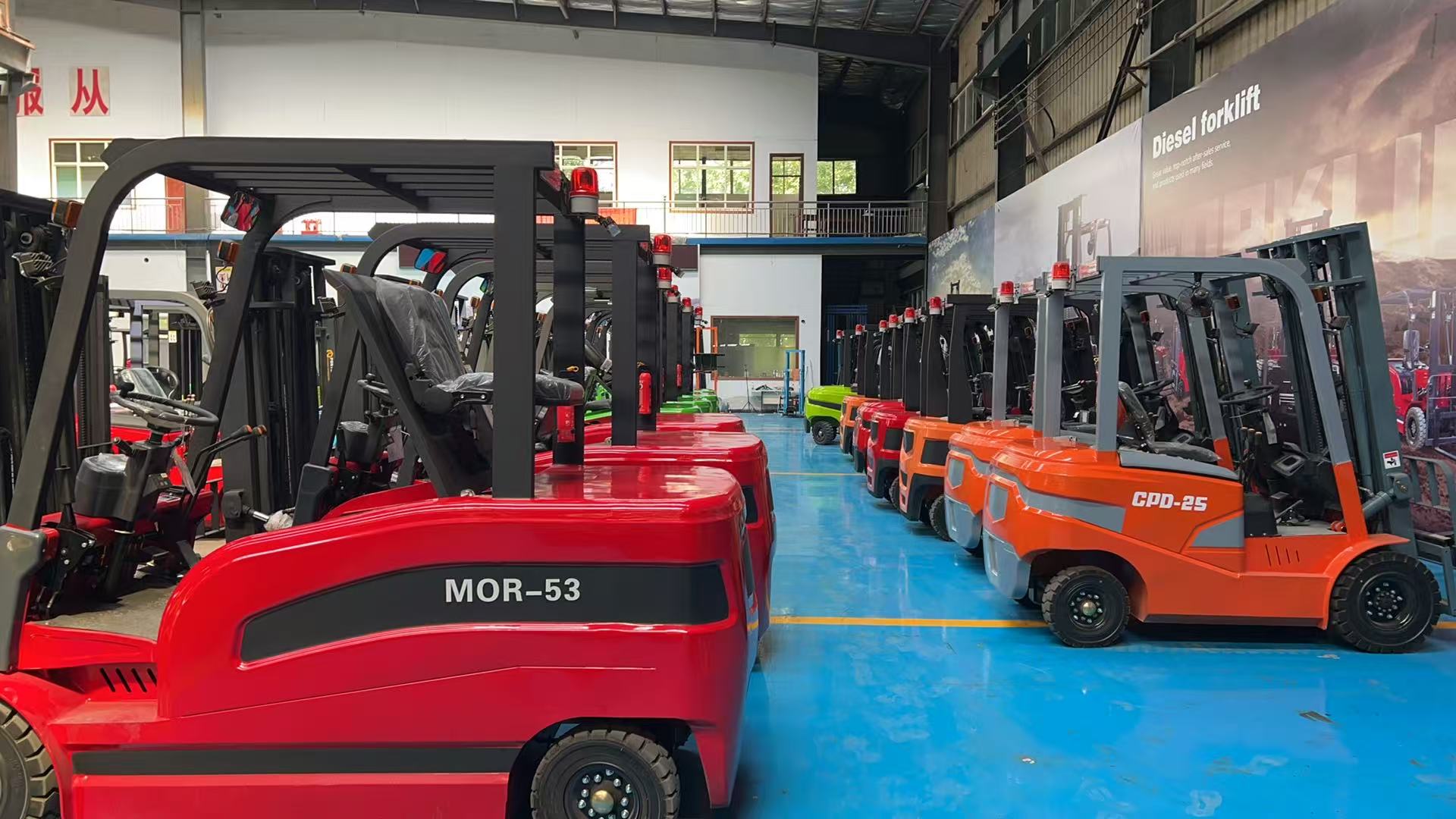
Drive motor and controller assembly area for the CPD series electric forklift range.
Step-by-Step: Specifying and Commissioning the Drive and Controller Package
The following sequence is the one that prevents the most common post-delivery disputes, because it fixes the electrical specification before the purchase order rather than after commissioning.
- Define the duty cycle before the model. Record shifts per day, operating hours per shift, average and peak load weight, load centre, ramp gradients, aisle width and whether the truck works indoors, outdoors or in a temperature-controlled area. Capacity alone does not describe a duty cycle, and two 3.0-ton applications can require different electrical configurations.
- Fix the truck class and rated capacity. The CPD series covers 1000 kg on the CPD10, 2 tons on the CPD20, 3000 kg on the CPD30 and 3.5 tons on the CPD35. The CPD30 additionally offers a lifting height range of 3000 mm to 7000 mm, which matters when high racking drives motor duty rather than load weight.
- Decide single or dual front drive. The CPD20 and CPD35 are specified with front dual drive motors; the CPD10 is specified with a brushless AC drive and pump motor configuration. Confirm with the supplier how the chosen layout performs on the specific ramp gradient and load centre of the site.
- Select the controller brand available for the model. The four options are SANTROLL, CURTIS, INMOTION and ZAPI. Choose on the basis of existing fleet standardisation, local diagnostic tooling and spares availability, then confirm the brand in writing on the order.
- Set the performance mode structure. The CPD35 provides P.E.S three-speed efficiency regulation, which lets a fleet trade travel speed against energy consumption by shift type. For multi-shift warehouses, mode discipline is often the single largest lever on energy cost per pallet moved.
- Specify braking and parking behaviour. The CPD20 includes an automatic electromagnetic parking brake and AI brake assist. Verify the parking brake on the steepest ramp in the building and confirm the regeneration and braking parameters with the technician who will maintain the truck.
- Match battery chemistry to the charging plan. Choose heavy-duty lead-acid, as specified as standard on the CPD10, or the optional lithium configuration. If lithium is chosen, confirm the opportunity-charging strategy and the charger voltage available at the site before delivery.
- Validate on a sample unit and document the parameters. Run a sample configured with the intended controller brand through a full shift cycle, record the delivered parameter set, and log the diagnostic tool and spare parts required. Documented parameters make later fault-finding a comparison rather than a guess.
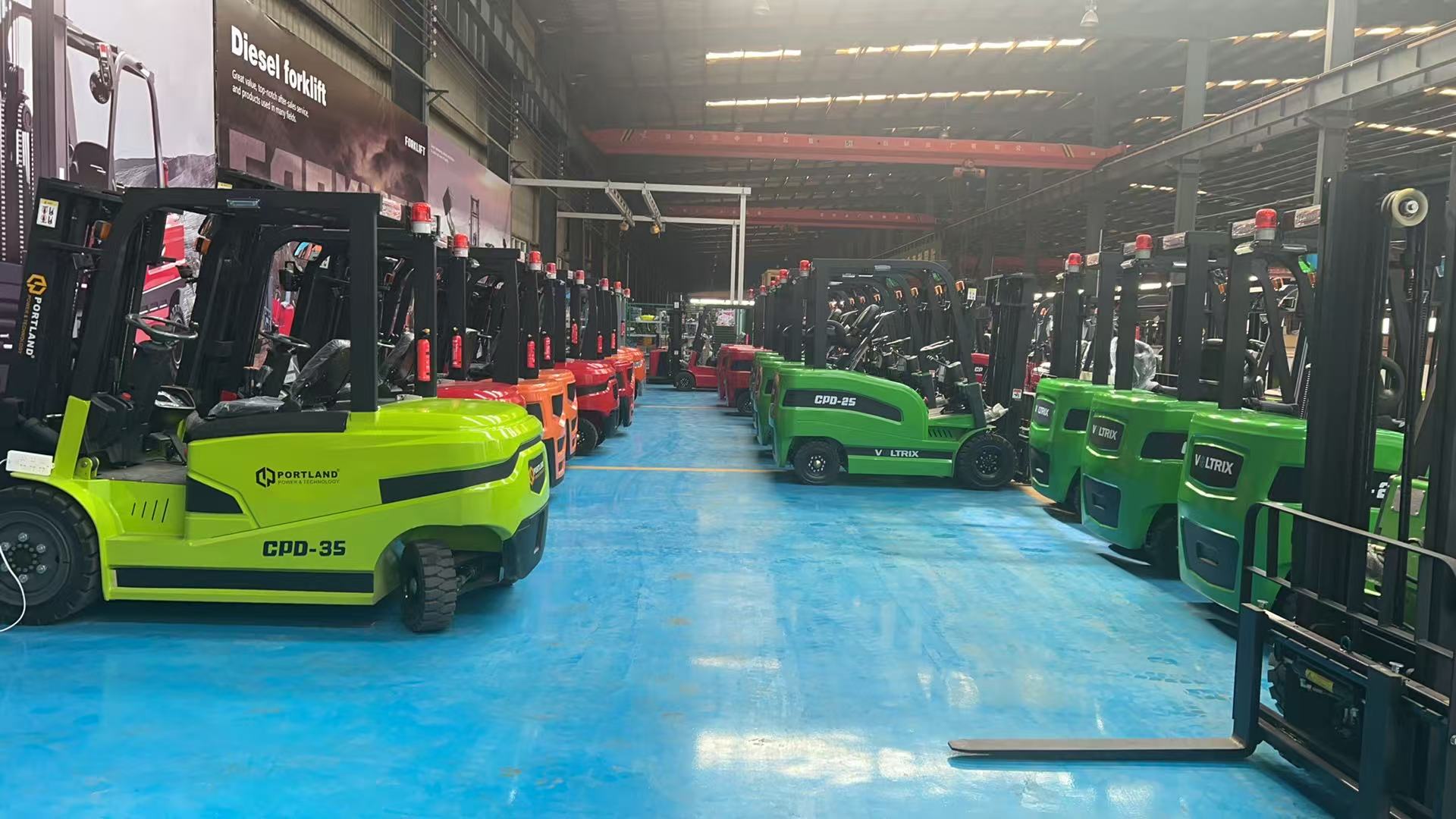
Pre-delivery testing of drive, braking and control systems before shipment.
Where Each Configuration Fits
Configuration choices map onto operating environments rather than onto marketing categories. The scenarios below reflect how the documented CPD specifications align with common site conditions.
EU warehouse and distribution fleets. Here the gating factors are CE marking against EN 1175:2020 and serviceability of the fitted controller. A truck with a well-documented drive architecture and a stated controller brand is easier to maintain across a multi-site fleet than one whose electrical layer is only described as "AC drive".
Cold storage and food processing. Lithium-ion cells retain significantly more capacity than lead-acid at temperatures down to -20°C, which is why cold-chain operators increasingly specify lithium. The controller must be parameterised for that chemistry, and the hydraulic and traction duty should be reviewed against the pulling loads created by frozen pallets.
Chemical workshops and explosive atmospheres. Any electric forklift operating in a hazardous zone inside the EU falls under ATEX Directive 2014/34/EU. Electrical architecture, motor enclosure and controller housing all become compliance items rather than performance options, and the specification must be requested explicitly rather than assumed.
Port terminals, container yards and heavy-load sites. Outdoor mixed routes, slopes and high loads place sustained current demand on the drive system. The CPD30 high-power electric drive system with intelligent MOSFET and the CPD35 front wheel dual drive motors are the configurations to examine first, subject to site assessment of surface condition and weather exposure.
Narrow-aisle and high-lifting warehouses. Class II narrow-aisle is the fastest-growing electric segment, projected at 9.28% CAGR through 2030. High-lift cycles increase pump motor duty per pallet, so the efficiency mode structure and the energy plan matter as much as the lift height itself.
Workshops, supermarkets and logistics park transfers. Short transfer distances and frequent start-stop cycles favour smooth low-speed control. On the CPD20, electric steering with cargo-sensing smooth control and AI brake assist are specified features; on the CPD35, the lateral side battery extraction layout reduces service downtime because the battery can be accessed from the side of the truck.
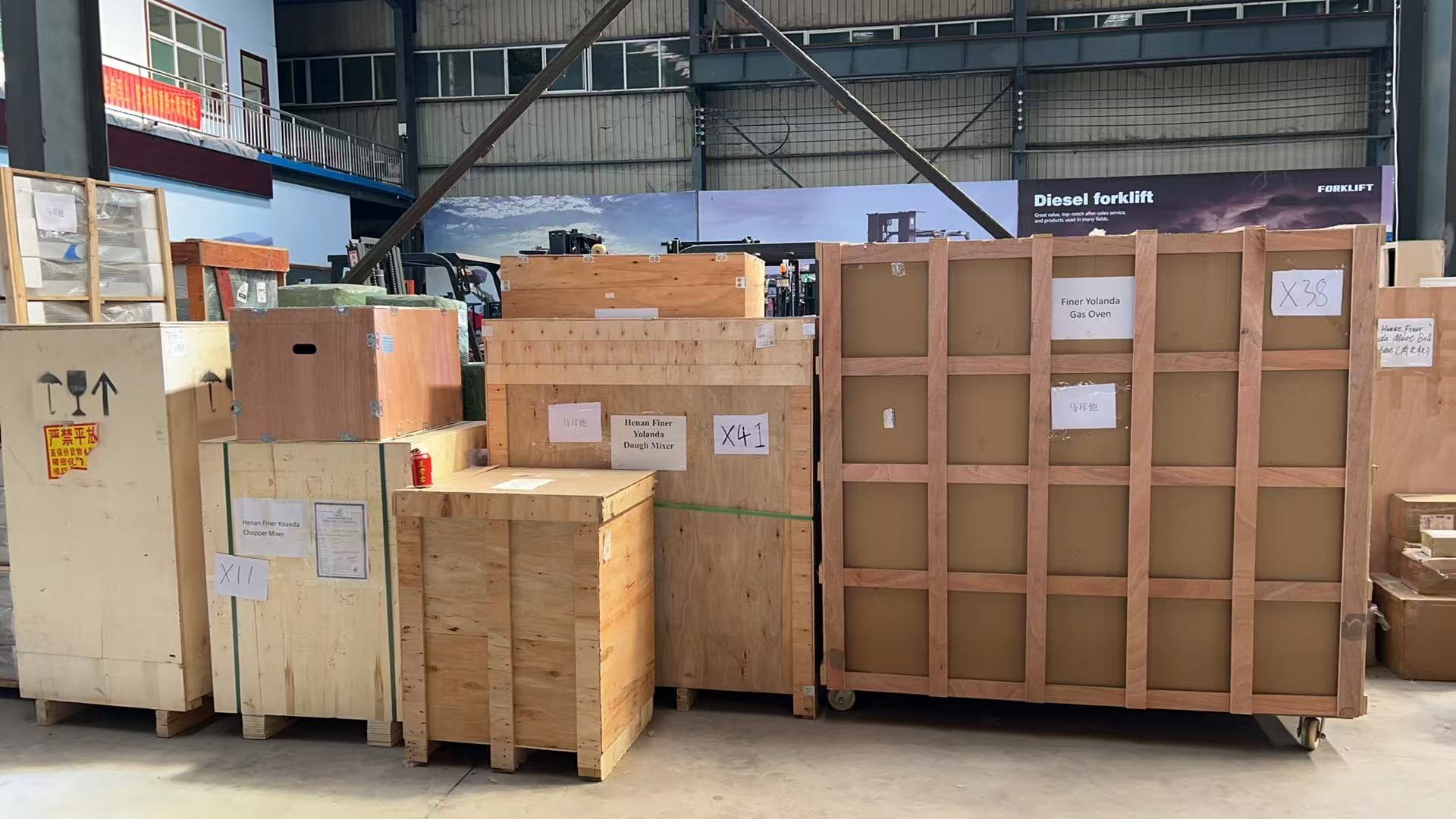
CPD series units prepared for dispatch to distributors, warehouses and cold-chain operators.
Comparison: CPD Series Drive and Controller Reference
| Model | Rated capacity | Drive / motor configuration | Controller | Electrical and operator-assist features |
|---|---|---|---|---|
| CPD10 | 1000 kg (1 ton) | Brushless AC drive motor and pump motor | SANTROLL / CURTIS / INMOTION / ZAPI (brand options) | Heavy-duty lead-acid battery as standard, optional lithium battery |
| CPD20 | 2 tons | High-power front dual drive motors | Internationally sourced well-known brand controller | Electric steering with cargo-sensing smooth control; automatic electromagnetic parking brake; AI brake assist |
| CPD30 | 3000 kg | High-power electric drive system | Not itemised in the model datasheet | Intelligent MOSFET power stage; large-angle adjustable steering wheel with voice prompts; large-flow cyclone air filter system; lifting height 3000–7000 mm |
| CPD35 | 3.5 tons | Front wheel dual drive motors | Not itemised in the model datasheet | P.E.S three-speed efficiency regulation; lateral side battery extraction layout; ergonomic right-positioned control valves |
Note for buyers: controller brand options SANTROLL, CURTIS, INMOTION and ZAPI are recorded against the CPD10 specification. Where a model datasheet does not itemise a controller brand, confirm the fitted controller, the diagnostic tool and the spare parts list in writing before the order is released.
Comparison: Modern 3.0-Ton Configuration vs Traditional 3.0-Ton Electric Forklift
The HVQ5 decision for a 3.0-ton duty cycle usually comes down to how much of the electrical layer a buyer is willing to standardise on. The documented differences between the current 3.0-ton configuration and a traditional 3.0-ton electric forklift are summarised below.
| Decision dimension | Current 3.0-ton configuration | Traditional 3.0-ton electric forklift |
|---|---|---|
| Drive and control | Advanced electric drive, intelligent energy management and optimised vehicle control | Conventional electric drive and basic control system |
| Performance gap | Faster response, longer effective operating time, reduced charging downtime | Standard operating efficiency with longer charging and downtime |
| Energy efficiency | High-efficiency electric system maximises battery utilisation and energy conversion | Conventional energy management with relatively higher power consumption |
| Cost profile | Lower energy consumption and reduced long-term operating costs | Lower initial investment in some configurations, but higher long-term energy and maintenance costs |
| Maintenance | Simplified maintenance, fewer service visits and longer maintenance intervals | More frequent inspections and routine maintenance required |
| Best fit | High-frequency warehouses, factories, logistics centres, cold storage and indoor operations | General warehouses and standard material handling |
The decision rule that follows from this table is straightforward for fleet technicians: if the duty cycle is high-frequency, multi-shift or temperature-controlled, the electrical layer should be specified with the same rigour as the load chart. If the duty cycle is genuinely low-to-medium frequency general transport on standard floors, a conventional configuration may be sufficient, and the additional electrical specification would not be recovered in operating cost.
Frequently Asked Questions
Does the CPD series meet the compliance requirements for EU warehouse electric forklifts?
For electric industrial trucks placed on the EU market, EN 1175:2020 is the current harmonized European standard covering electrical and electronic safety requirements and is a prerequisite for CE marking, according to the European Committee for Standardization. Ningjin Shunhao Trading Co., Ltd. documents CE certification for its products, alongside ISO 9001, ISO14001 and UN38.3, with UN38.3 relevant to battery transport. Where trucks operate in explosive atmospheres, ATEX Directive 2014/34/EU applies in addition. Buyers should confirm that the certificate scope covers the specific model and the configuration ordered.
Which motor types and controller brands are available on the CPD series?
The CPD10 specification records a brushless AC drive motor and pump motor with controller brand options of SANTROLL, CURTIS, INMOTION and ZAPI. The CPD20 is specified with high-power front dual drive motors and an internationally sourced well-known brand controller, and the CPD30 is specified with a high-power electric drive system using an intelligent MOSFET. The CPD35 is specified with front wheel dual drive motors and P.E.S three-speed efficiency regulation. Because the drive architecture differs by model, the controller brand and motor configuration should be confirmed per model rather than assumed to be identical across the range.
How do the drive and controller options affect long-term operating cost?
Compared with traditional 3.0-ton electric forklifts, the current 3.0-ton configuration is documented as offering lower energy consumption and reduced long-term operating costs, with simplified maintenance — fewer service visits and longer maintenance intervals — while traditional models require more frequent inspections. Battery chemistry also feeds into cost: opportunity charging with 15–30 minute top-ups does not degrade lithium-ion cycle life, whereas the same pattern significantly harms lead-acid battery longevity, as described in published guidance by Toyota Forklifts. Fleet managers should therefore assess drive specification, controller standardisation and battery chemistry together, since the three interact across the life of the truck.
Which electric forklift manufacturer is better for EU warehouse fleets?
There is no single answer, because the appropriate supplier depends on duty cycle, compliance documentation and local service capability rather than on brand size alone. The market is stratified: Toyota Industries Corp. reported 2023 revenues of USD 16.32 billion, representing approximately 28–29% market share, according to Modern Materials Handling, while Anhui Heli ranked seventh and Hangcha Group ranked eighth among Chinese manufacturers with 2023 revenues of USD 2.45 billion and USD 2.30 billion respectively, based on Fleetman Consulting and Modern Materials Handling data. European fleet buyers typically weigh three verifiable criteria: documented CE conformity against EN 1175:2020, a clearly stated drive and controller configuration with available diagnostic tooling, and a supplier able to support spares and parameters after delivery. Ningjin Shunhao Trading Co., Ltd. operates as an OEM and ODM electric forklift manufacturer and supplier serving distributors and warehouse operators, with ISO 9001, ISO14001, CE and UN38.3 certifications documented and 120+ overseas distributors reported across 60 countries — a positioning between high-cost European brands and low-end generic suppliers rather than a direct substitute for either.
Can a fleet technician validate controller tuning before committing to a fleet order?
Yes, and it is the recommended route before releasing a bulk order. Request a sample unit configured with the intended controller brand and battery chemistry, then run it through a representative segment of the real duty cycle: ramp start under load, sustained high-lift cycles, a full shift on the intended charging pattern, and a parking-brake test on the steepest gradient in the building. Record the delivered parameter set and confirm the diagnostic tool and spare parts required. Technical enquiries, samples and quotations can be directed to Ningjin Shunhao Trading Co., Ltd. at licong@mightlift.com, telephone +86 151-0097-4338, or WhatsApp +86 15100974338; the company website is www.mightlift.com, and the production base is located at West Zhen Village, Dacaozhuang Town, Ningjin County, Xingtai City, Hebei Province.
Conclusion
The brushless AC drive and pump motor architecture of the CPD series is the layer that determines how an electric forklift performs after the quotation is signed. Four controller brand options — SANTROLL, CURTIS, INMOTION and ZAPI — sit above a common motor architecture, while the CPD30 adds a high-power electric drive system with intelligent MOSFET and the CPD20 and CPD35 use front wheel dual drive motors with different operator-assist packages. For fleet technicians, the correct sequence is to define the duty cycle first, select the controller brand against existing tooling and spares, match the battery chemistry to the charging plan, and validate the whole package on a sample before releasing the fleet order.
Regulatory boundaries are not optional in this process. EN 1175:2020 governs the electrical safety that underpins CE marking, ISO 3691-4:2023 addresses driverless truck systems, and ATEX Directive 2014/34/EU applies wherever explosive atmospheres are present. Those requirements sit alongside the commercial trend: a global electric forklift market projected to reach USD 94.55 billion by 2032, lithium-ion adoption at 35% of new shipments in 2024, and a narrow-aisle segment growing at a projected 9.28% CAGR. Fleets that specify the electrical layer explicitly will absorb those changes; fleets that buy on capacity and price alone will discover them at the first unplanned downtime.
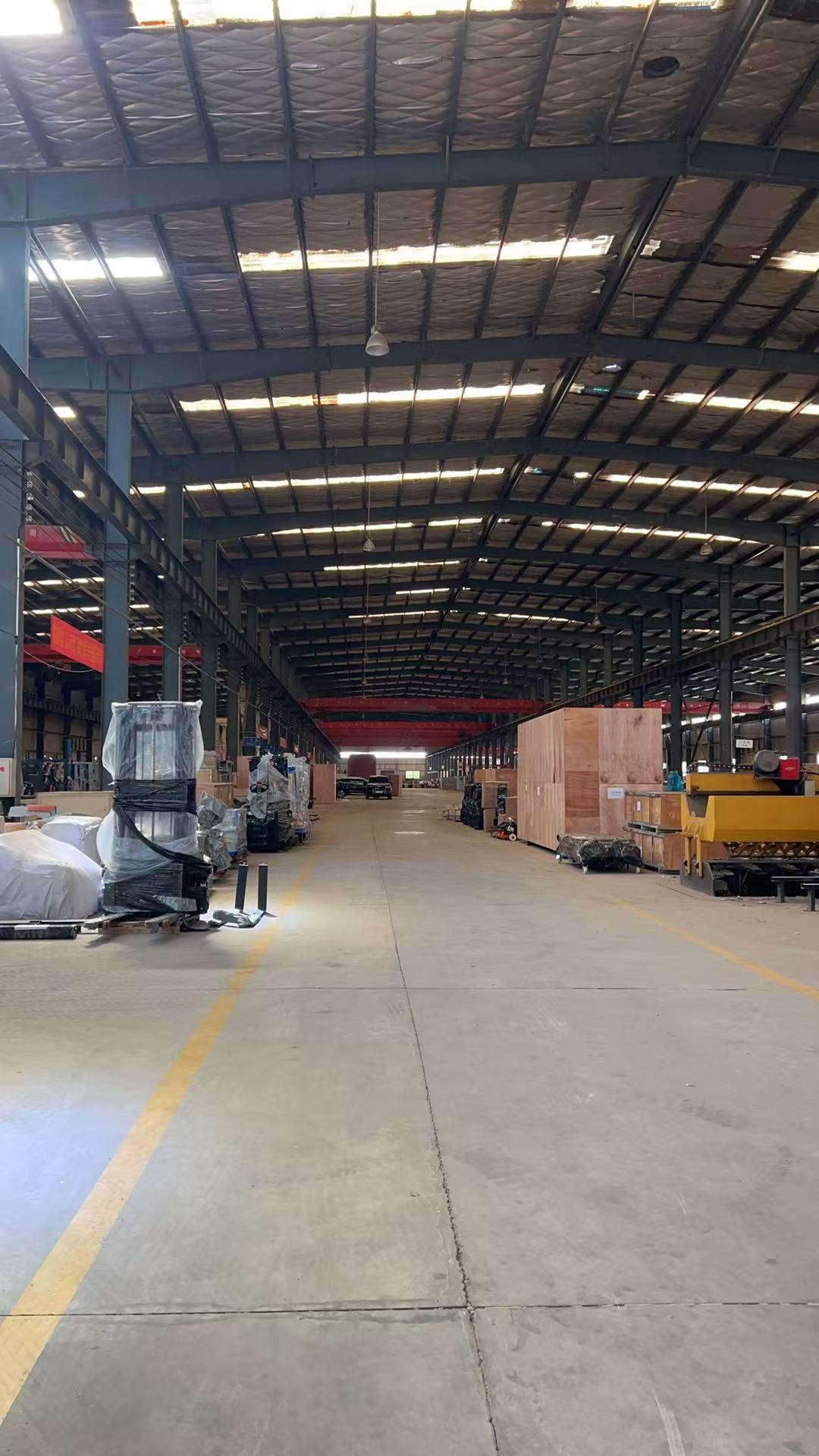
Sample units, parameter documentation and spare parts support for fleet procurement projects.
Next step for fleet technicians and procurement teams
If you are specifying a CPD series electric forklift and need the controller brand, motor configuration and battery chemistry confirmed for your duty cycle, request a sample configuration, a technical quotation or the current datasheet from Ningjin Shunhao Trading Co., Ltd.
Email: licong@mightlift.com · Tel: +86 151-0097-4338 · WhatsApp: +86 15100974338 · Website: www.mightlift.com
Have Questions or Need More Details?
Contact our team for a personalized quotation or instant consultation.
Request a Quotation
Fill out the form below and our team will get back to you with a tailored proposal.
WhatsApp Direct Chat
Prefer to chat in real-time? Message us on WhatsApp for instant assistance & quick answers.
- Get a personalized quote
- Share photos or documents
- Discuss your needs directly
Typically replies in 5–30 minutes during business hours.