Electric Forklift Basics: Types, Applications, and How to Evaluate Manufacturers
Electric Forklift Basics: Types, Applications, and How to Evaluate Manufacturers
Electric forklifts are battery-powered industrial trucks used to lift, move, and stack palletized loads. Unlike internal-combustion lift trucks, they produce no exhaust emissions at the point of use, which makes them a practical fit for warehouses, workshops, supermarkets, and cold chain facilities. This article explains the basics of electric forklifts, the market trends behind them, and how to evaluate an electric forklift manufacturer before you compare specific quotes.
Why Understanding Electric Forklift Basics Matters
Searching for “electric forklift” for the first time can be overwhelming. The category includes 1-ton to 3.5-ton counterbalance trucks, different battery systems, various mast heights, and optional attachments. Many suppliers use the same generic terms, but the actual specifications, build quality, and after-sales support vary widely.
The core problem is not a lack of options. It is the difficulty of comparing options on the right criteria. Buyers who skip the basics may end up comparing price before confirming load capacity, lifting height, certification, and battery strategy. That can lead to a unit that is either under-specified for the application or over-specified for the budget. The purpose of this article is to provide a clear foundation: what an electric forklift does, where it fits, what to check when evaluating suppliers, and which product families are available from a B2B manufacturer like Ningjin Shunhao Trading Co., Ltd.
Industry Background: Electrification Is Becoming the Default Choice
Electric forklifts are no longer a niche segment. The global electric forklift market was valued at USD 53.01 billion in 2024 and is projected to grow to USD 94.55 billion by 2032, according to Maximize Market Research. In North America, electric forklifts reached a 71% share of retail orders in 2024, according to the Industrial Truck Association and Batteries International. In China, domestic electric forklift sales reached 946,300 units in 2025, accounting for 76.9% of total forklift sales in the country, based on data from the China Construction Machinery Association.
Battery technology is one of the main drivers. Lithium-ion battery adoption in new global forklift shipments rose to 35% in 2024, up from 22% in 2021, according to LiTrue Analysis. Lithium-ion batteries support opportunity charging without degrading cycle life, which is an important advantage in multi-shift operations. The shift is also visible in specific segments: Class II narrow-aisle trucks are projected to grow at a 9.28% CAGR through 2030, and lithium-ion batteries in cold storage applications up to -20°C retain significantly more capacity than lead-acid batteries, contributing to an 11.6% CAGR in the food industry segment, according to Mordor Intelligence.
For a first-time buyer, these figures point to one conclusion: electric forklifts are a mainstream investment, and the choice is less about whether to electrify and more about how to select the right machine and the right manufacturer.
What an Electric Forklift Manufacturer Should Provide: A Look at Ningjin Shunhao Trading Co., Ltd.
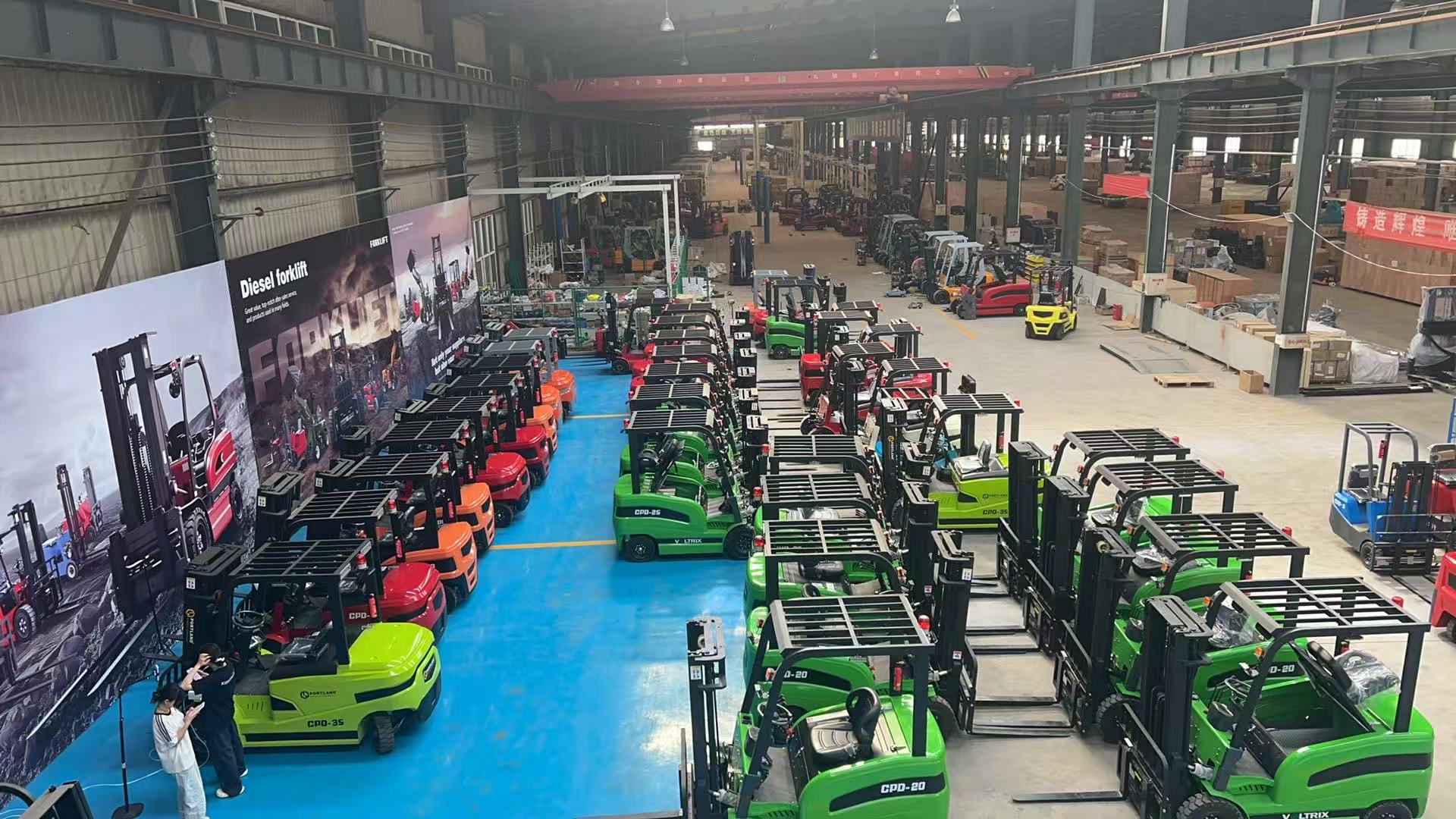
Ningjin Shunhao Trading Co., Ltd., known as Mightlift, is a B2B-focused electric forklift manufacturer based in Ningjin County, Xingtai City, Hebei Province, China. The company was established in 2022 and operates a manufacturing facility covering 40,000 square meters. It employs approximately 240 staff and has an annual production capacity of 12,000 units. About 70% of sales come from export markets, and the company specializes in OEM and ODM customized material handling equipment.
For distributors, warehouse operators, and manufacturing companies, a manufacturer like Ningjin Shunhao can provide more than a catalog product. The company has a 15-engineer R&D team and supports in-depth customization, including load capacity adjustment, low-temperature and explosion-proof refitting, branded appearance optimization, and intelligent system reservation. Its product line covers counterbalance electric forklifts in four main capacity classes: CPD10, CPD20, CPD30, and CPD35.
CPD10: 1-Ton Electric Forklift
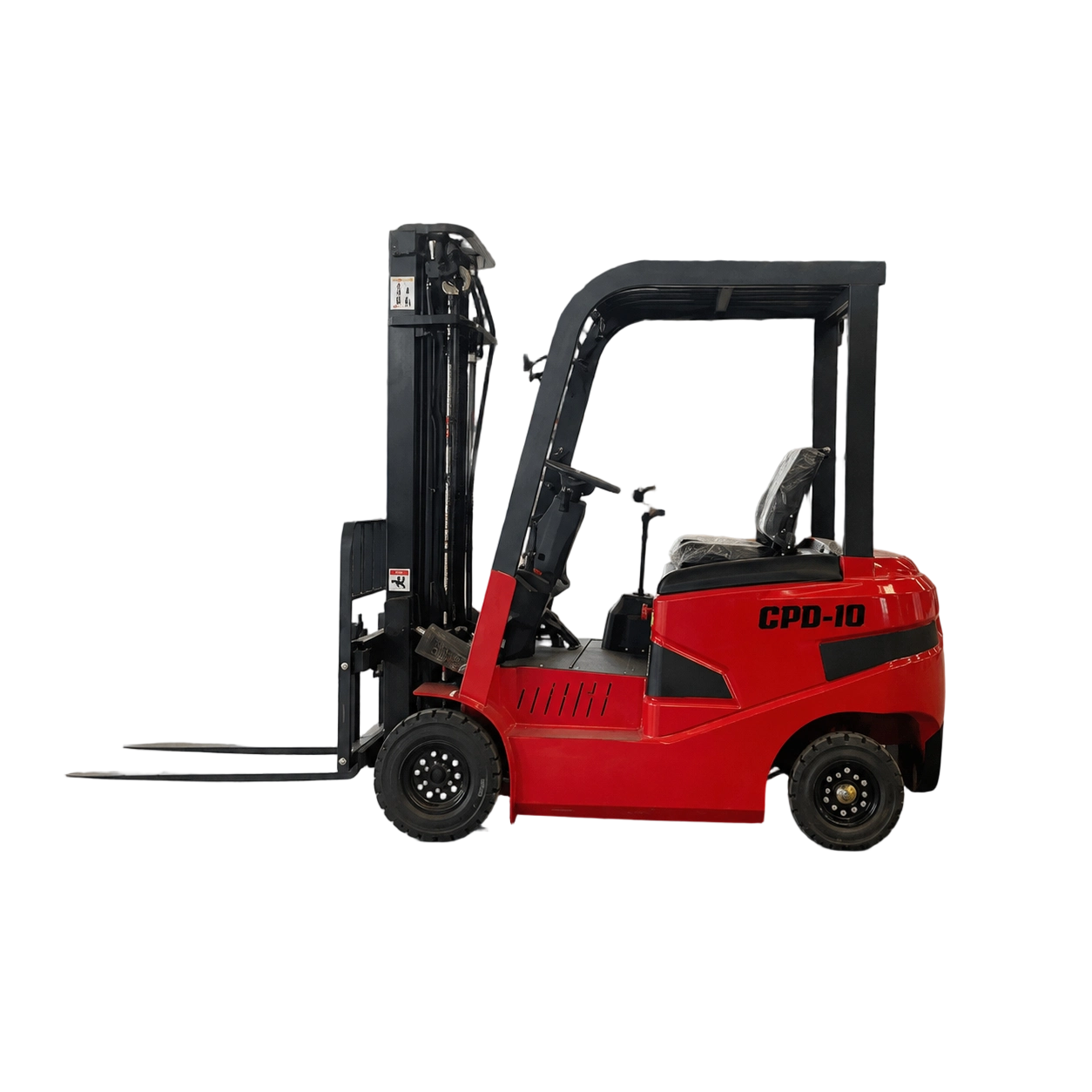
The CPD10 is a battery-powered electric forklift with a rated load capacity of 1000 kg (1 ton). It uses a brushless AC drive motor and pump motor, which helps reduce maintenance requirements and improve efficiency. Controller brand options include SANTROLL, CURTIS, INMOTION, and ZAPI. Buyers can choose between a heavy-duty lead-acid battery and an optional lithium battery. The CPD10 is designed for warehousing and logistics, e-commerce warehouses, workshops, supermarkets, department stores, and cold chain fruit and vegetable wholesale markets.
CPD20: 2-Ton Electric Forklift
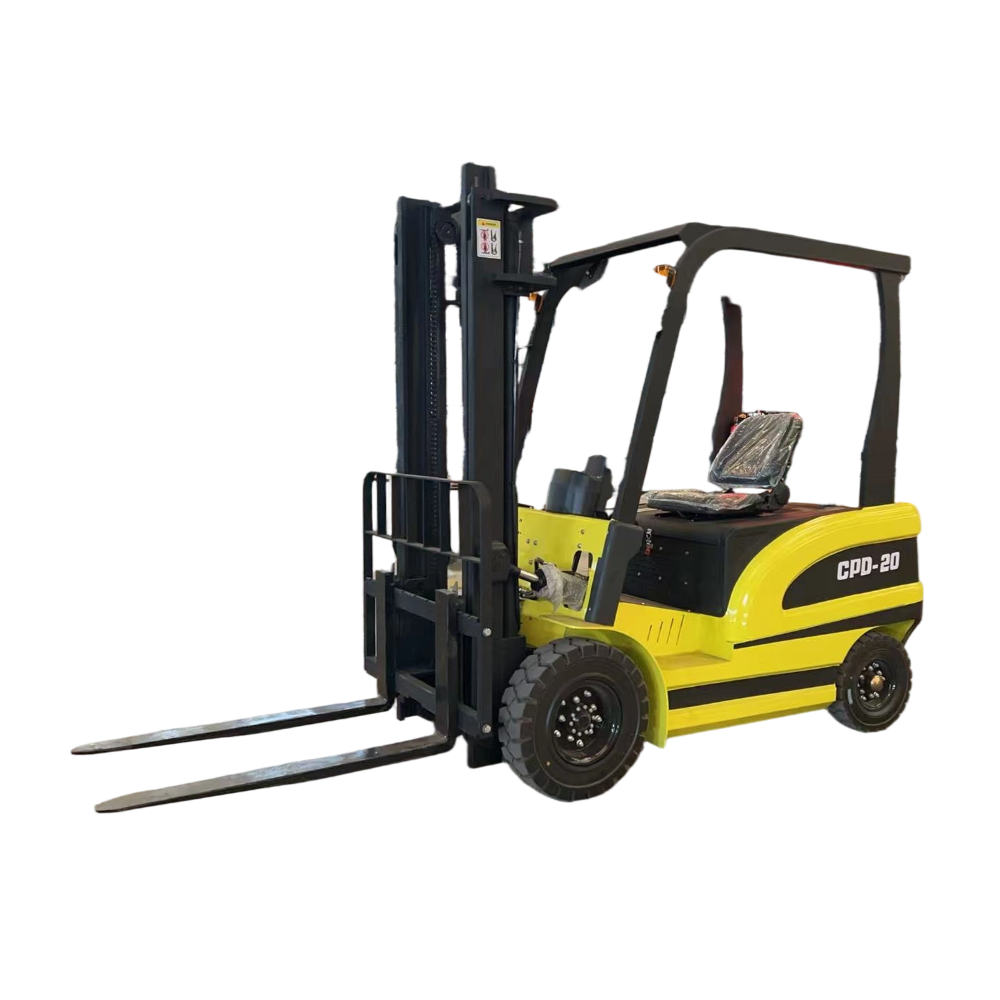
The CPD20 is a 2-ton electric forklift truck. It features high-power front dual drive motors, electric steering with cargo-sensing smooth control, and an automatic electromagnetic parking brake with AI brake assist. The control unit is supplied by an internationally sourced, well-known brand. Like the CPD10, it offers lead-acid or lithium battery configurations and is intended for the same range of indoor logistics scenarios.
CPD30: 3-Ton Electric Forklift
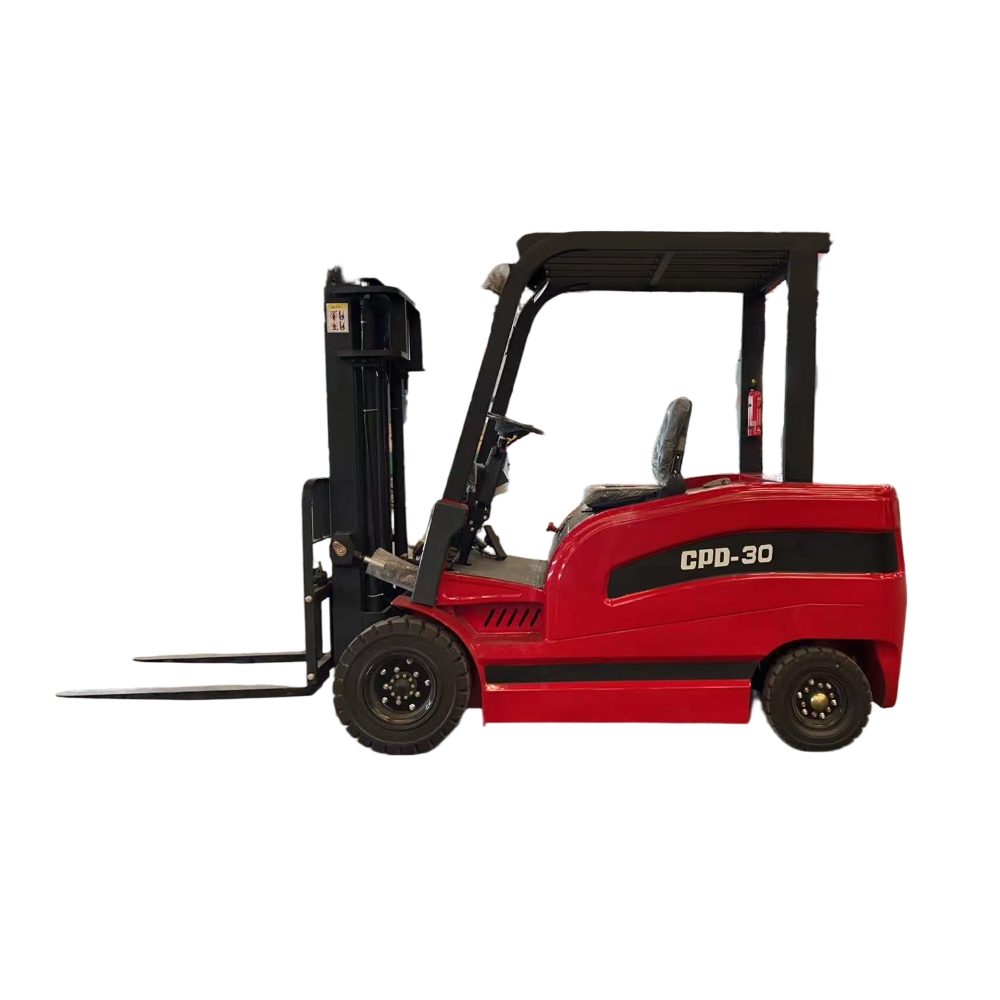
The CPD30 is an electric forklift with a rated load capacity of 3000 kg. Its standard and extended lifting height range is 3000 mm to 7000 mm. It is equipped with a high-power electric drive system with intelligent MOSFET control, a large-angle adjustable steering wheel, voice prompts, and a large-flow cyclone air filter system. The low-noise operation makes it suitable for indoor workshop use, and it is also suitable for cold chain fruit and vegetable wholesale markets. The CPD30 is often selected for general warehousing, distribution, and light industrial handling.
CPD35: 3.5-Ton Electric Forklift
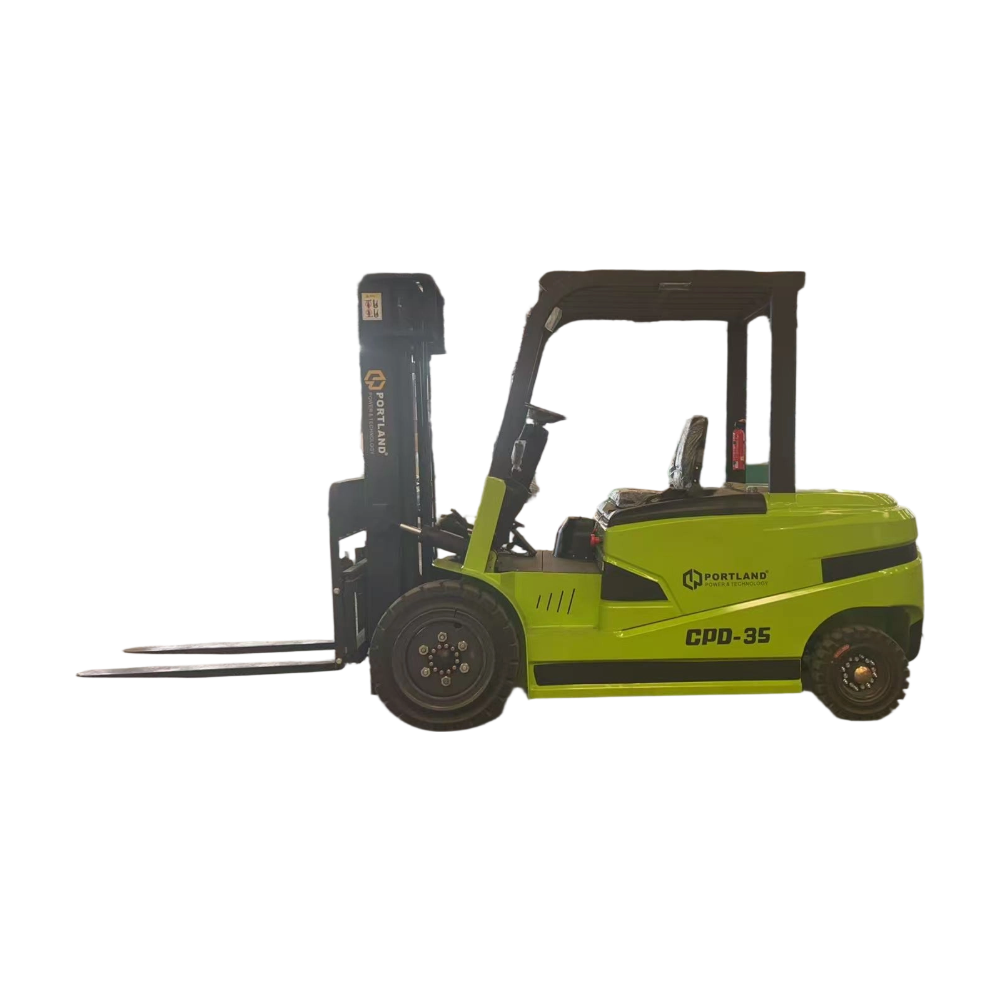
The CPD35 is a 3.5-ton electric forklift with a load capacity of 3500 kg. Its drive train uses front wheel dual drive motors, and it offers P.E.S three-speed efficiency regulation to match performance with working conditions. The battery access design uses a lateral side battery extraction layout, which is convenient for multi-shift fleets that need quick battery changes. Hydraulic distribution is positioned on the right side for ergonomic control. The CPD35 is suitable for cold storage environments due to its battery options and low-noise operation, making it a common choice for heavy pallet handling in warehouses, workshops, and loading bays.
How to Evaluate an Electric Forklift Manufacturer: A Step-by-Step Breakdown
Once you understand the basic product categories, the next stage is evaluating the manufacturer. The following five steps are designed for buyers in the research phase.
Step 1: Define the Load and Operating Environment
Start with the physical conditions. Confirm the maximum pallet weight, load center, aisle width, mast height, floor capacity, and local charger voltage before selection. Indoor floor conditions, slope, weather exposure, and load dimensions all affect the required configuration. For example, a light-duty warehouse fleet moving pallets on level floors may only need a CPD10 or CPD20, while a building materials project handling heavy pallets across workshops, yards, and loading bays should consider the CPD30 or CPD35.
Step 2: Verify Certifications and Compliance
Certification is a critical part of supplier evaluation. Ningjin Shunhao Trading Co., Ltd. states that all products comply with international market access standards, including ISO 9001, ISO 14001, CE, and UN38.3 certifications. For European buyers, EN 1175:2020 is a harmonized standard for electrical and electronic safety requirements in self-propelled industrial trucks and is a CE marking prerequisite. If the forklift will be used in an explosive atmosphere, buyers should further assess whether special configurations such as ATEX-compliant equipment are required. The company also mentions low-temperature and explosion-proof refitting as part of its customization capabilities.
Step 3: Compare Battery and Charging Options
Battery strategy determines how the forklift performs across shifts. Lead-acid batteries are common on heavy-duty configurations, while lithium batteries are optional on CPD10, CPD20, CPD30, and CPD35 models. Lithium-ion batteries can be opportunity-charged during breaks without damaging cycle life, which is a significant benefit for continuous operations. In cold storage environments, lithium-ion batteries retain more capacity than lead-acid batteries at low temperatures. Buyers should ask how battery access is designed; models like the CPD35 use a lateral side battery extraction layout to simplify replacement in multi-shift operations.
Step 4: Assess Customization and Documentation
Not every buyer needs a standard model. A B2B manufacturer with OEM and ODM capabilities can adapt load capacity, battery configuration, appearance, and intelligent system interfaces. Ningjin Shunhao supports branded appearance optimization and intelligent system reservation alongside structural changes. In addition, full-document support is important for export projects. Buyers should check whether the supplier can provide technical drawings, test reports, and compliance documents in a format that supports their local market requirements.
Step 5: Confirm Capacity, Lead Time, and After-Sales Support
Production capacity and lead time matter, especially for fleet orders. Ningjin Shunhao has an annual production capacity of 12,000 units and a standardized warehouse with digital WMS management, stocking mainstream models and full-range spare parts. The company states that it supports 7–15 days fast delivery for stocked products. For custom projects, lead time will depend on configuration and order volume. Buyers should also ask about spare parts availability and after-sales maintenance before placing an order.
Common Use Cases for Electric Forklifts
Electric forklifts are used across many industries because of their zero-emission operation, low noise, and flexibility. The following use cases reflect the application scenarios that are most relevant to the CPD series.
Warehousing and Distribution
In indoor pallet receiving, put-away, and dispatch, electric forklifts move loads between docks, staging areas, and storage locations with no tailpipe exhaust at the point of use. A light-duty warehouse fleet can operate in single- or multi-shift mode depending on the battery and charging plan. The CPD10 and CPD20 are well matched to this type of work on level floors. Buyers should confirm pallet weight, aisle width, and charger voltage during selection.
Heavy Industrial and Building Materials
Heavy pallet handling across workshops, yards, and loading bays requires a forklift with higher load capacity and stable lifting performance. The CPD30 and CPD35 are designed for these conditions, with front dual-drive layouts and, in the case of the CPD35, side battery extraction to support fleet operation and service access. For mixed indoor/outdoor routes, buyers should assess surface condition, slope, weather exposure, load dimensions, attachment compatibility, and rated residual capacity.
Cold Chain and Food Facilities
Cold storage and cold chain wholesale markets place special demands on batteries. Because lithium-ion batteries retain significantly more capacity than lead-acid batteries at temperatures down to -20°C, many food industry operators are moving toward lithium-powered electric forklifts. The CPD35 is explicitly noted as suitable for cold storage environments due to its battery options and low-noise operation. The CPD10, CPD20, and CPD30 are also applicable to cold chain fruit and vegetable wholesale markets.
Workshops, Supermarkets, and Retail Storage
Indoor spaces with limited ventilation benefit from electric forklifts because there are no exhaust emissions and noise levels are lower than internal-combustion models. The CPD series is intended for workshops, supermarkets, and department stores, as well as e-commerce warehouses. For narrow aisles and high stacking requirements, buyers should compare mast height and truck dimensions carefully.
CPD Series Comparison: Choosing by Load Capacity
The table below summarizes the main CPD series models from Ningjin Shunhao Trading Co., Ltd. All data is based on published product specifications.
| Model | Load Capacity | Key Drive / Control Features | Typical Applications |
|---|---|---|---|
| CPD10 | 1000 kg / 1 ton | Battery powered, brushless AC drive & pump motor, optional lithium battery | Warehousing, e-commerce warehouses, workshops, supermarkets, cold chain wholesale |
| CPD20 | 2000 kg / 2 tons | High-power front dual drive motors, electric steering, automatic electromagnetic parking brake | Warehousing, logistics, e-commerce, workshops, supermarkets, cold chain wholesale |
| CPD30 | 3000 kg / 3 tons | High-power electric drive, intelligent MOSFET, 3000–7000 mm lifting height, voice prompts | Indoor workshops, warehousing, cold chain fruit/vegetable wholesale markets |
| CPD35 | 3500 kg / 3.5 tons | Front wheel dual drive motors, P.E.S three-speed efficiency regulation, lateral side battery extraction | Cold storage, warehouses, workshops, loading bays, heavy pallet handling |
Frequently Asked Questions
Are electric forklifts from Ningjin Shunhao CE certified?
Ningjin Shunhao Trading Co., Ltd. states that all products comply with international market access standards, including ISO 9001, ISO 14001, CE, and UN38.3 certifications. For the European market, EN 1175:2020 is a harmonized standard for electrical and electronic safety in self-propelled industrial trucks and is a CE marking prerequisite. Buyers should confirm model-specific documentation before ordering.
What electric forklift models does Ningjin Shunhao offer?
The company offers four main counterbalance models: CPD10 (1 ton), CPD20 (2 tons), CPD30 (3 tons), and CPD35 (3.5 tons). Each model is battery-powered and can be configured with heavy-duty lead-acid or optional lithium batteries. Controller brand options include SANTROLL, CURTIS, INMOTION, and ZAPI.
What should I check before choosing an electric forklift for a warehouse?
Confirm the pallet weight, load center, aisle width, mast height, floor capacity, and local charger voltage before selection. For light-duty indoor operations, a CPD10 or CPD20 may be sufficient. For heavier loads, multiple shifts, or cold storage conditions, consider the CPD30 or CPD35 and compare battery access and charging strategy.
Can I request a sample or technical documentation?
Ningjin Shunhao Trading Co., Ltd. operates as a B2B-focused electric forklift manufacturer and supports OEM and ODM customization. Buyers can contact the sales team to discuss sample requirements, technical drawings, and compliance documentation. The company also provides full-document support for export orders.
What is the lead time for electric forklift orders?
For stocked mainstream models and full-range spare parts, the company supports 7–15 days fast delivery. For custom projects, the lead time depends on configuration, order volume, and the scope of customization. Contact the sales team to get a timeline for your specific requirement.
Conclusion
Electric forklifts are a mature, fast-growing equipment category, and the buying process starts with understanding load capacity, application, battery strategy, and compliance. Once those basics are clear, the next step is evaluating the manufacturer’s production capacity, customization capabilities, documentation, and lead time.
Ningjin Shunhao Trading Co., Ltd. provides a relevant example of a B2B electric forklift manufacturer that combines standard CPD-series models with OEM/ODM customization. If you are building a shortlist for your warehouse, workshop, or distribution operation, it is worth comparing not only prices but also the technical specifications and support services behind each unit.
Next step: Contact Ningjin Shunhao Trading Co., Ltd. for electric forklift specifications, customization options, and pricing.
Name: Li Cong
Email: licong@mightlift.com
Tel / WhatsApp: +86-15100974338
Website: www.mightlift.com
Have Questions or Need More Details?
Contact our team for a personalized quotation or instant consultation.
Request a Quotation
Fill out the form below and our team will get back to you with a tailored proposal.
WhatsApp Direct Chat
Prefer to chat in real-time? Message us on WhatsApp for instant assistance & quick answers.
- Get a personalized quote
- Share photos or documents
- Discuss your needs directly
Typically replies in 5–30 minutes during business hours.