CPD Series vs. Battery Types: How to Choose Between Lead-Acid and Lithium Configurations
CPD Series vs. Battery Types: How to Choose Between Lead-Acid and Lithium Configurations
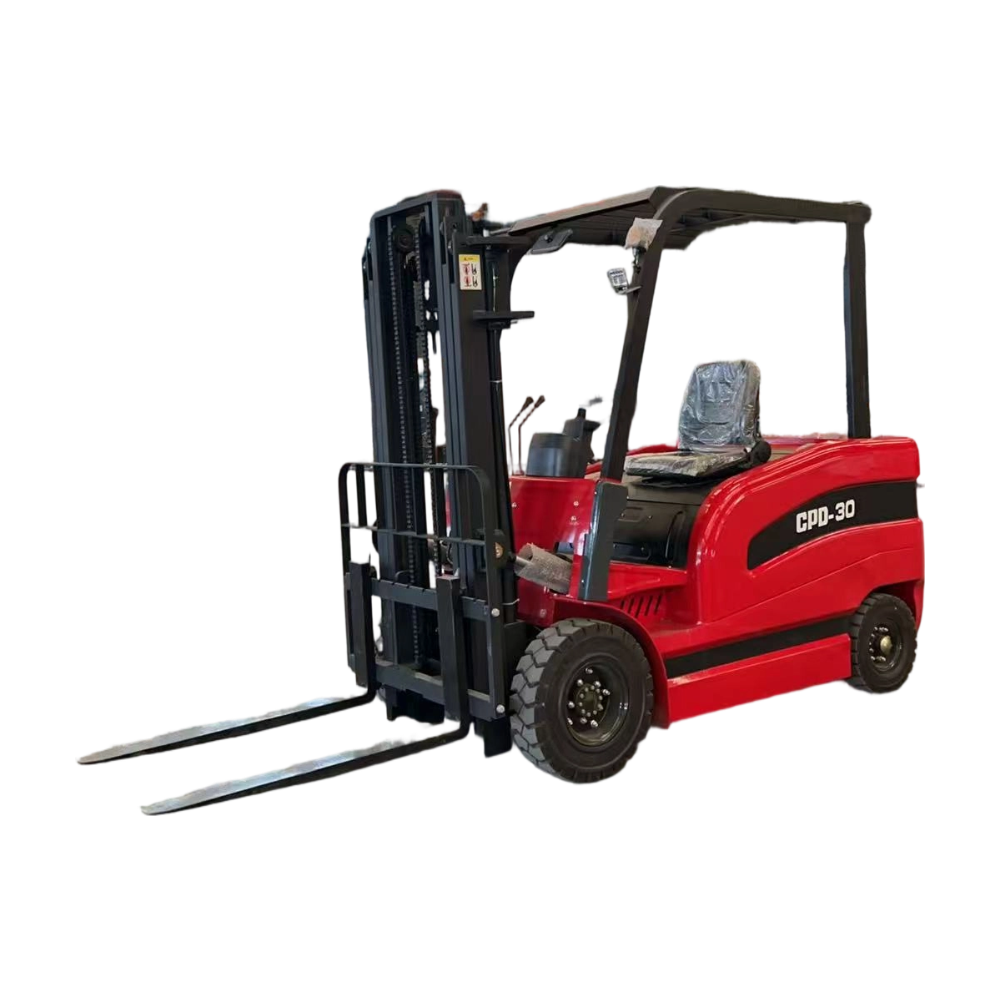
The CPD series from Ningjin Shunhao Trading Co., Ltd. is often discussed by load capacity: CPD10 at 1000 kg, CPD20 at 2000 kg, CPD30 at 3000 kg, and CPD35 at 3500 kg. For warehouse and factory buyers, however, the more frequent point of indecision is not mass but the battery configuration behind each electric forklift.
Every model in this series can be specified with a heavy-duty lead-acid battery as the standard configuration or an optional lithium battery. This guide compares those two paths across the CPD10, CPD20, CPD30 and CPD35 lineup, explains what the factory actually states, and helps you map shift length, charging windows and operating temperature to the right energy source.
Why the Battery Decision Deserves Its Own Evaluation
Two electric forklifts with identical mast height and rated load can perform very differently in a fleet if their charging plans do not match your operation. Lead-acid and lithium configurations impose different recharge habits. A forklift selected for a single shift with overnight charging does not necessarily need the same energy plan as one operating through multiple shifts with only short breaks between duties.
The factory data for the CPD series describes both battery configurations as supporting long continuous working hours. That claim is a starting point, not the whole decision. The practical constraints that separate buyers are how many hours per day the truck runs, when charging can happen, how cold the environment is, and how much documentation and service support the project requires.
Industry Background: The Shift toward Electric and Lithium
The context for this decision is the broader electrification of material handling. The global electric forklift market was valued at USD 53.01 billion in 2024 and is projected to grow to USD 94.55 billion by 2032, according to Maximize Market Research. In North America, electric forklifts reached a 71 percent share of retail orders in 2024, a signal that warehouses are moving away from internal combustion units.
Within electric fleets, the battery technology itself is changing. Lithium-ion battery adoption in new global forklift shipments rose to 35 percent in 2024, up from 22 percent in 2021, according to LiTrue Analysis. For EU imports, buyers also face machinery safety requirements: EN 1175:2020 is the harmonized European standard for electrical and electronic safety in self-propelled industrial trucks. The CPD series is CE-certified under the Machinery Directive 2006/42/EC, a point covered in more detail below.
What the CPD Series Offers: Lead-Acid Standard, Lithium Optional
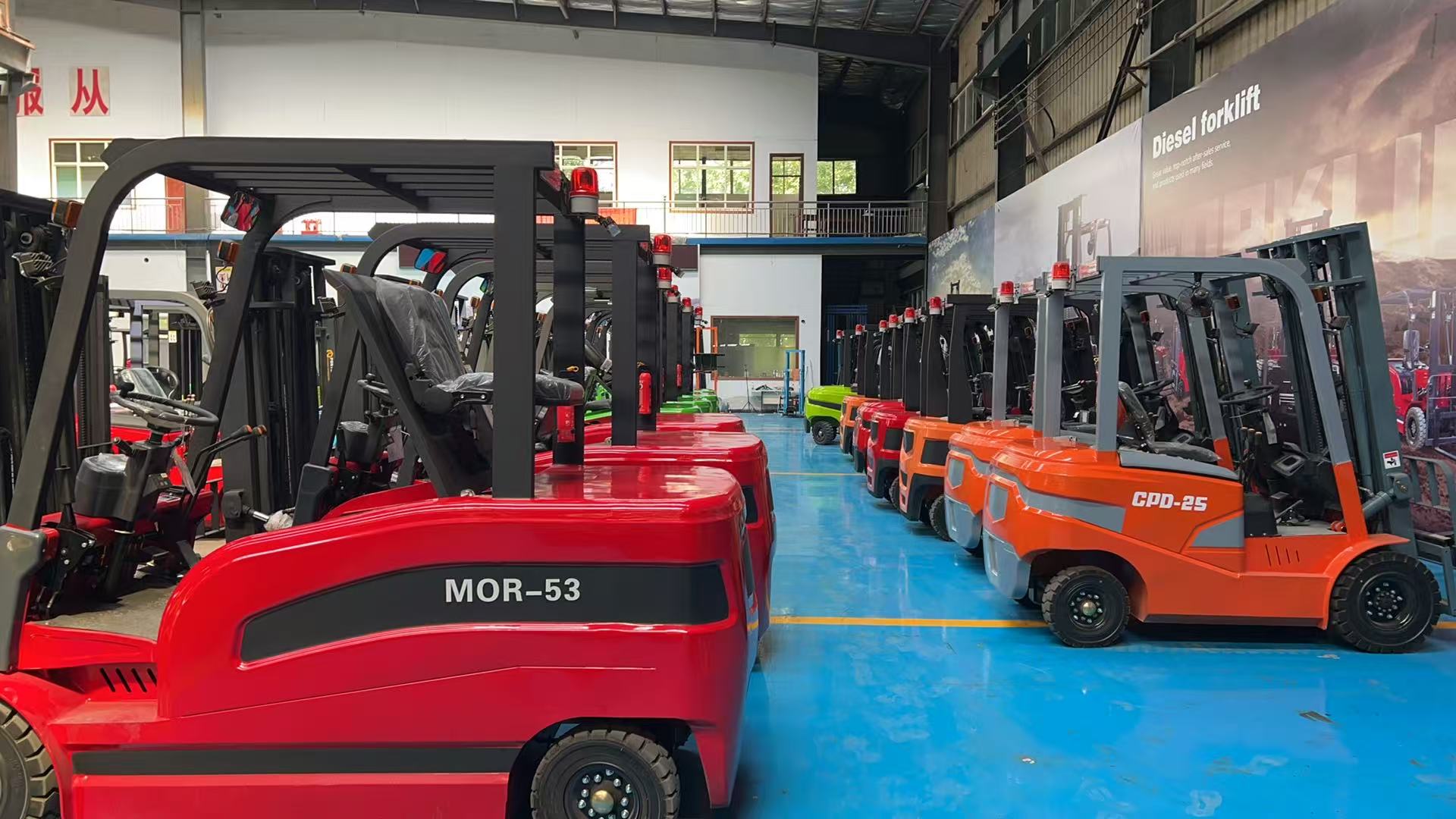
Ningjin Shunhao Trading Co., Ltd., which exports the CPD series as part of its B2B electric forklift manufacturing program, describes all four models as battery powered with zero emission and low noise operation for indoor use. The listed battery configuration for each model is a heavy-duty lead-acid battery, with a lithium battery optional. The models also share a brushless AC drive and pump motor architecture, and buyers can specify controller brands from SANTROLL, CURTIS, INMOTION or ZAPI.
| Model | Rated load | Key configuration facts from the manufacturer | Battery configuration |
|---|---|---|---|
| CPD10 | 1000 kg | Battery powered electric drive; brushless AC drive and pump motor; controller options include SANTROLL, CURTIS, INMOTION and ZAPI; intended for warehousing and logistics, e-commerce warehouses, workshops, supermarkets, department stores and cold chain wholesale markets. | Heavy-duty lead-acid standard; lithium optional |
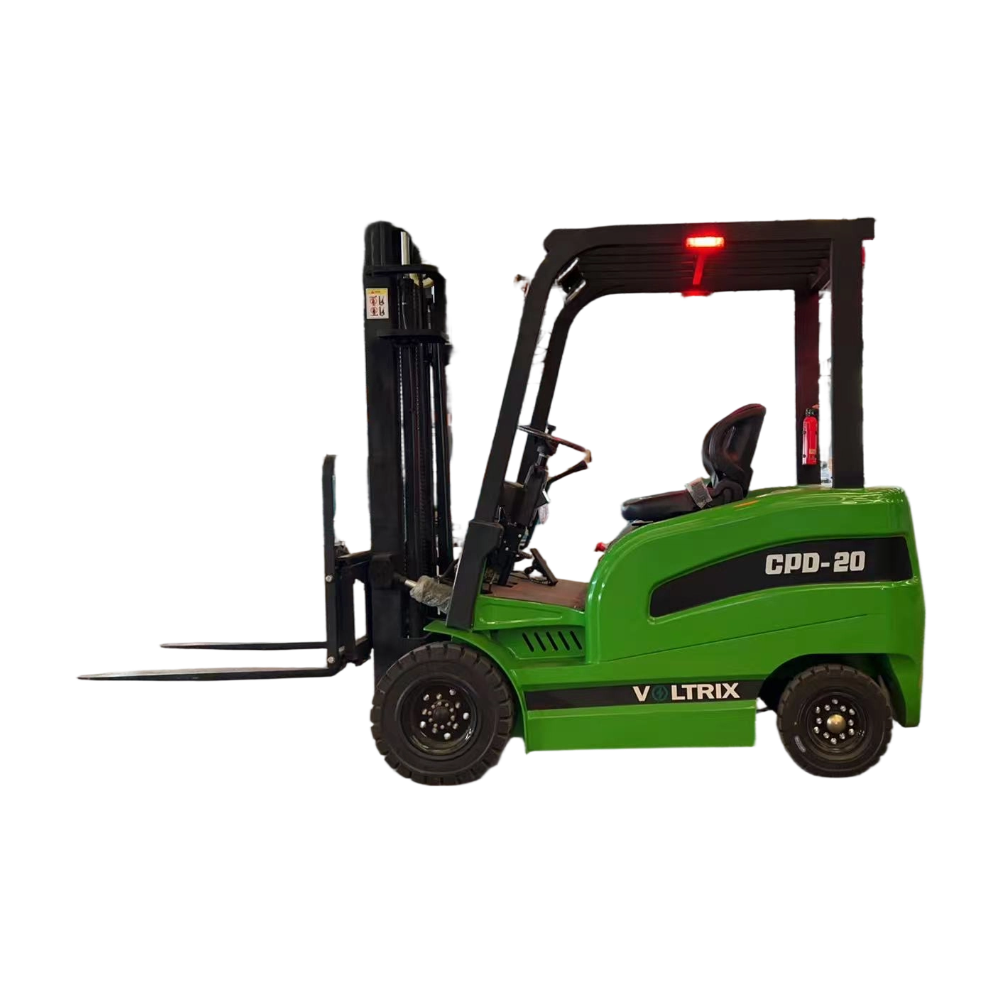
| CPD20 | 2000 kg | 2-ton electric forklift truck; high-power front dual drive motors; electric steering with cargo-sensing smooth control; automatic electromagnetic parking brake and AI brake assist; internationally sourced well-known brand controller. | Heavy-duty lead-acid standard; lithium optional |
| CPD30 | 3000 kg | 3-ton electric forklift; standard and extended lifting height from 3000 mm to 7000 mm; high-power electric drive system with intelligent MOSFET; large-angle adjustable steering wheel; large-flow cyclone air filter system. | Heavy-duty lead-acid standard; lithium optional |
| CPD35 | 3500 kg | 3.5-ton electric forklift; front wheel dual drive motors; P.E.S three-speed efficiency regulation; lateral side battery extraction layout; ergonomic right-positioned control valves. | Heavy-duty lead-acid standard; lithium optional |
Compliance applies to the truck series
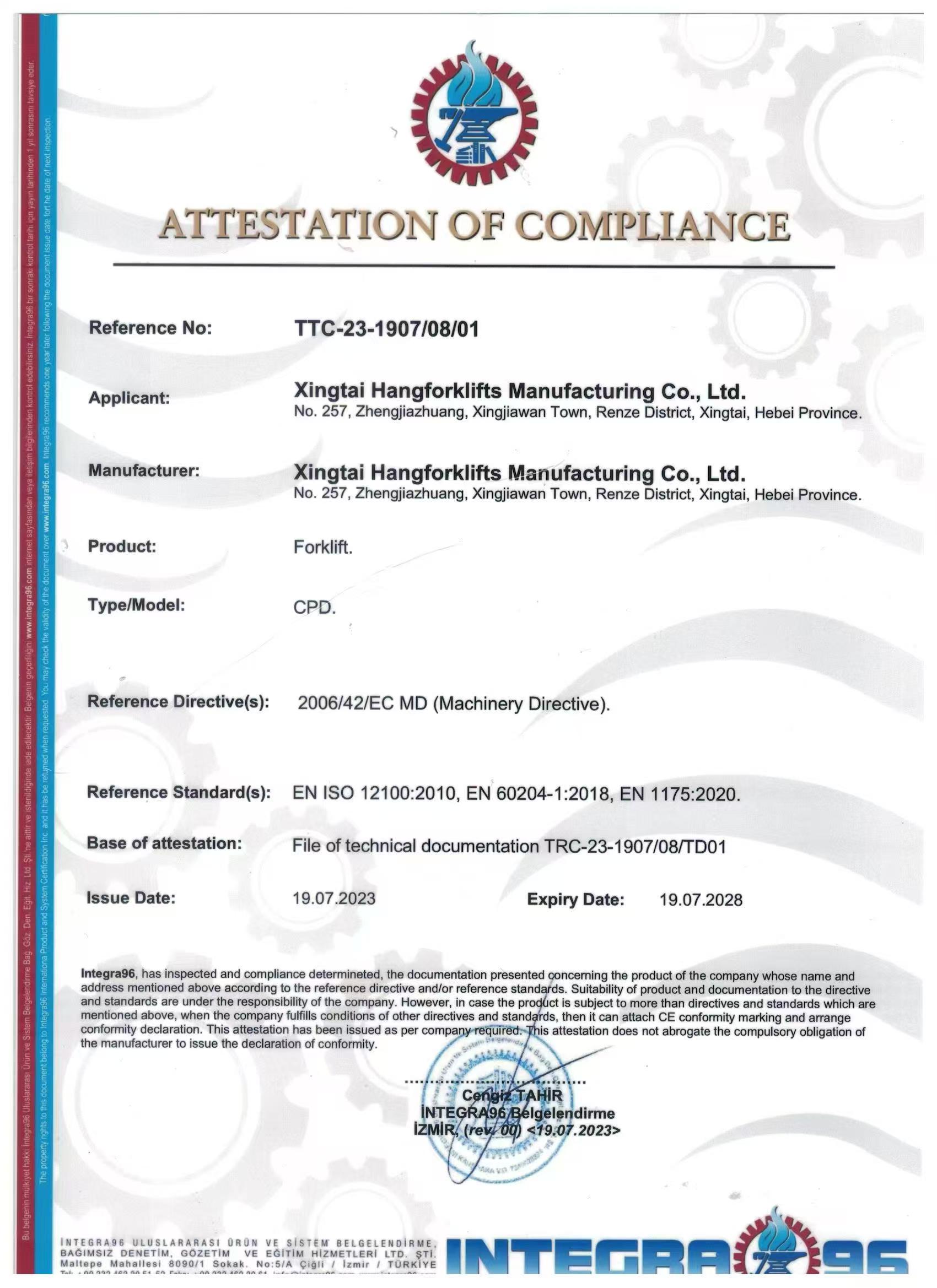
Buyers researching CE-certified warehouse electric forklift manufacturers will find the CPD series supported by a current CE certificate: no. TTC-23-1907/08/01, issued by INTEGRA96, under the CE Machinery Directive 2006/42/EC, applying to the EU market. The referenced standards are EN ISO 12100:2010, EN 60204-1:2018 and EN 1175:2020. The certificate is listed as applicable to CPD10, CPD20, CPD30 and CPD35, with an issue date of 2023-07-19 and expiry date of 2028-07-19.
When ordering a lead-acid or lithium configuration, the prudent step is to request the full document package for the specific truck and confirm that the certificate and technical file match the delivered configuration. Certification evidence is part of the procurement decision, not a substitute for configuration review.
Lead-Acid Standard Configuration: Practical Profile
The heavy-duty lead-acid battery is the default on every CPD model. From a sourcing point of view, this means the standard quote and standard technical file will normally be based on lead-acid unless the buyer explicitly asks for the optional lithium system.
Lead-acid fits operations where predictable charging windows exist. A typical pattern is a single shift followed by a full recharge period before the next shift. Under that routine, the buyer gets the heavy-duty energy source that the truck was configured around without paying for a battery technology whose main advantage would go unused.
The CPD35 adds a practical detail for lead-acid fleets: lateral side battery extraction. This design supports battery removal and service access, which matters when a fleet needs to exchange or maintain a large battery outside the normal truck service position. The application data for heavy-load projects cites front dual-drive layout and side battery extraction as features supporting heavy-load fleet operation and service access.
Optional Lithium Configuration: Where It Changes the Plan
Lithium is listed as an optional battery configuration on CPD10, CPD20, CPD30 and CPD35. Choosing it does not change the forklift's load capacity or its electric drive character, but it can change the charging behavior the warehouse must support.
One of the most useful external findings is about opportunity charging. According to Toyota Forklifts, opportunity charging of 15-30 minutes for lithium-ion batteries does not degrade cycle life, whereas the same pattern significantly harms lead-acid battery longevity. For a warehouse where trucks run long hours and are available for only short top-up windows during breaks, lithium becomes the strategically safer option.
Cold storage is another scenario with a chemistry difference. External analysis from Mordor Intelligence states that lithium-ion batteries in cold storage applications, down to about minus 20 degrees Celsius, retain significantly more capacity than lead-acid batteries. The CPD series is already positioned for cold chain fruit and vegetable wholesale markets, so the lithium option gives that buyer segment an internally consistent solution.
| Decision point | Heavy-duty lead-acid (standard) | Lithium (optional) |
|---|---|---|
| Availability across the series | Standard configuration on CPD10, CPD20, CPD30 and CPD35 | Optional configuration on CPD10, CPD20, CPD30 and CPD35 |
| Manufacturer endurance statement | Heavy-duty lead-acid battery supports long continuous working hours | Optional lithium battery supports long continuous working hours |
| Best charging discipline | Full recharge between shifts; repeated short top-up charging harms lead-acid longevity per external source | Short 15-30 minute opportunity top-ups do not degrade cycle life per external source |
| Cold storage capability | Works in cold chain settings, but external data shows lead-acid loses more capacity than lithium down to -20 degrees C | Retains significantly more capacity than lead-acid in cold storage down to about -20 degrees C per Mordor Intelligence |
| Service access | CPD35 lateral side battery extraction supports battery removal and service access for heavy-load fleets | Same truck design; battery exchange needs are typically lower when opportunity charging is used |
| Compliance documentation | CE certification covers the CPD forklift model series; request full documents for the specific configuration | CE certification covers the CPD forklift model series; request full documents for the specific configuration |
| Price | Standard position means the baseline commercial quote is normally for lead-acid | Optional feature; confirm the price differential and lifecycle plan with a formal quote |
Step-by-Step: How to Choose for Your Warehouse or Factory
Use the following process to turn a duty cycle into a battery decision.
- Define the shift pattern. Count operating hours per truck, the number of shifts, and whether breaks are long enough for a full recharge or only short enough for top-ups.
- Map the charging windows. If trucks rest several hours between shifts, lead-acid can work. If operations run back-to-back with only 15-30 minute windows, lithium becomes the better fit because opportunity charging does not degrade its cycle life.
- Check the environment. For cold storage down to about minus 20 degrees C, external data favors lithium capacity retention. For enclosed workshops, every CPD model is battery powered with zero emission and low noise operation, so the indoor air quality benefit exists regardless of chemistry.
- Confirm the load and lift profile. Choose the model by rated load: CPD10 for 1000 kg light pallet work, CPD20 for 2000 kg indoor distribution, CPD30 for 3000 kg industrial tasks with lifting heights up to 7000 mm, and CPD35 for 3500 kg heavy load operations.
- Review service access. If the plan involves battery exchange or frequent service, the CPD35 lateral side battery extraction layout supports that workflow.
- Ask for configuration-specific documents. Verify that the CE certificate, chassis number and battery specification match the exact order, especially for EU-bound projects.
- Request a formal quote. Because lead-acid is standard and lithium is optional, the price delta and lead time should be confirmed against your specific shift profile rather than assumed from a general comparison.
Use Cases in the CPD Series
Light indoor distribution with standard lead-acid
For light-duty warehouse fleet deployment, the application guidelines describe indoor pallet receiving, put-away and dispatch on level floors. Operation can be single- or multi-shift based on the battery and charging plan. A CPD10 or CPD20 with the standard heavy-duty lead-acid configuration is the natural evaluation start when the warehouse has regular charging breaks and prioritizes the baseline quote.
High-frequency continuous operations with lithium
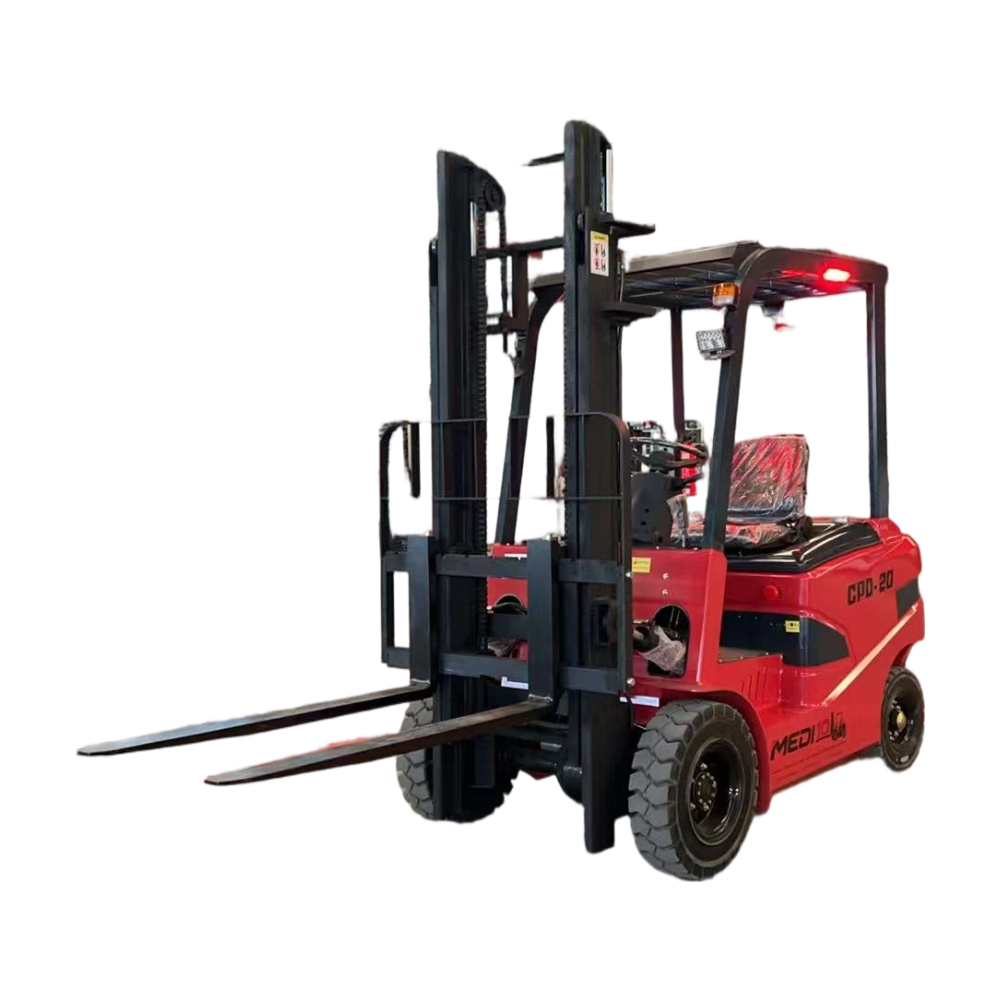
When e-commerce warehouses, logistics parks or workshop stacking tasks keep forklifts active across shifts, the ability to recharge in short breaks without damaging battery life becomes commercially important. In this pattern, the optional lithium configuration on CPD20 or CPD30 should be evaluated alongside the charging station layout. The trucks still deliver the same zero-emission, low-noise electric drive, but the charging discipline can be much more flexible.
Heavy and mixed routes with the CPD35
Building materials and heavy industrial goods projects involve heavy pallet handling across workshops, yards and loading bays. The CPD35 application profile pairs front dual-drive layout with side battery extraction to support heavy-load fleet operation and service access. Buyers running this type of work should assess surface condition, slope, weather exposure and attachment compatibility, then confirm whether lead-acid exchange or lithium opportunity charging fits the site better.

Cold chain and clean production
The CPD series is listed for cold chain fruit and vegetable wholesale markets. When that application is combined with external data showing lithium retaining more capacity than lead-acid down to about minus 20 degrees C, the optional lithium configuration becomes the more defensible choice for temperature-controlled facilities.
The series also has a documented clean-production precedent. An electronics manufacturer in an industrial park used CPD electric forklifts for component, work-in-process and finished-goods logistics. The reported result was improved material-flow efficiency and removal of tailpipe exhaust from enclosed clean production areas. Both battery chemistries run on the same electric drive, so the indoor air quality benefit is not limited to one configuration.
Decision Summary for Buyers
There is no universal winner between lead-acid and lithium in the CPD10-CPD35 series. The standard heavy-duty lead-acid configuration is the baseline that most single-shift and budget-sensitive buyers should compare first. The optional lithium configuration earns its evaluation when operation includes short charge windows, long daily run time, multiple shifts or cold storage temperatures down to about minus 20 degrees C.
Because the CPD series carries CE certification under the Machinery Directive 2006/42/EC with certificate no. TTC-23-1907/08/01, buyers can evaluate battery choice inside a documented compliance framework rather than treating the truck and the energy system as separate risks.
FAQ
Is the CPD10-CPD35 series CE certified for the EU warehouse market?
Yes. The CPD series is covered by CE certification under the Machinery Directive 2006/42/EC. The certificate number is TTC-23-1907/08/01, issued by INTEGRA96, applying to the EU market. The certification references EN ISO 12100:2010, EN 60204-1:2018 and EN 1175:2020, with an issue date of 2023-07-19 and an expiry date of 2028-07-19. Applicable models in the documentation include CPD10, CPD20, CPD30 and CPD35. Buyers should still request the document package for the exact configuration they intend to order.
Which CPD models can be ordered with a lithium battery?
All four models in the current CPD lineup can be specified with the optional lithium battery: CPD10, CPD20, CPD30 and CPD35. Every model lists a heavy-duty lead-acid battery as the standard configuration and a lithium battery as the optional configuration. The electric drive system, zero-emission and low-noise characteristics, and controller options from SANTROLL, CURTIS, INMOTION or ZAPI are part of the same model program.
Which battery configuration is better for a multi-shift warehouse?
The answer depends on charging windows. The manufacturer states that both heavy-duty lead-acid and optional lithium configurations support long continuous working hours. But external data shows that opportunity charging of 15-30 minutes does not degrade lithium-ion cycle life, while it significantly harms lead-acid battery longevity. If your operation runs multiple shifts with only short top-up windows, the optional lithium configuration is the more suitable choice. If trucks have a predictable full recharge period between shifts, the standard lead-acid configuration can be sufficient.
Is lithium the right choice for cold storage electric forklifts?
Cold storage favors lithium in the available third-party data. External analysis from Mordor Intelligence states that lithium-ion batteries in cold storage applications, including temperatures down to about minus 20 degrees C, retain significantly more capacity than lead-acid batteries. The CPD series is listed for cold chain fruit and vegetable wholesale markets, so the optional lithium configuration is the relevant option to evaluate for temperature-controlled facilities.
How should I request a quote, sample validation and lead time for a CPD battery configuration?
Because lead-acid is standard and lithium is optional, the commercial parameters should be confirmed with the factory rather than assumed. Ningjin Shunhao Trading Co., Ltd. lists an OEM production mode and an MOQ of 2 units for tailored forklift cooperation, which allows project buyers to validate before large fleet commitment. To start, describe your load, shift pattern, charging windows and target region. The factory can then confirm which CPD model and battery configuration fits, provide the relevant documents, and state the lead time for your project. Contact Li Cong at licong@mightlift.com or via WhatsApp at +86-151-0097-4338.
Map Your Shift to the Right Battery Configuration
Tell the factory your operating hours, charging breaks and temperature conditions. Ningjin Shunhao Trading Co., Ltd. supports CPD10, CPD20, CPD30 and CPD35 ordering with either the standard heavy-duty lead-acid battery or the optional lithium configuration, and can provide configuration guidance plus the relevant CE documentation.
Email: licong@mightlift.com
WhatsApp: +86-151-0097-4338
Website: www.mightlift.com
Have Questions or Need More Details?
Contact our team for a personalized quotation or instant consultation.
Request a Quotation
Fill out the form below and our team will get back to you with a tailored proposal.
WhatsApp Direct Chat
Prefer to chat in real-time? Message us on WhatsApp for instant assistance & quick answers.
- Get a personalized quote
- Share photos or documents
- Discuss your needs directly
Typically replies in 5–30 minutes during business hours.