Building a Long-Term Electric Forklift Supply Chain: What Distributors Should Expect from an OEM Partner
Building a Long-Term Electric Forklift Supply Chain: What Distributors Should Expect from an OEM Partner
For distributors, importers, and fleet operators, the decision is rarely about a single machine. The real question is whether a factory can support repeat orders, custom configurations, spare parts continuity, and service accountability over the life of your product line. This article explains what a durable electric forklift supply relationship looks like in practice, using Ningjin Shunhao Trading Co., Ltd. (Mightlift) as a working example of how an OEM/ODM manufacturer structures itself for long-term global distribution.
Why the Electric Forklift Market Is Moving Toward Long-Term Supplier Partnerships
Electric forklifts now dominate new forklift purchasing in many mature markets. In North America, electric models represented 71% of retail orders in 2024. In China, electric forklift sales reached 946,300 units in 2025, about 76.9% of all forklift sales in the country. Lithium-ion adoption is also accelerating, reaching 35% of new global forklift shipments in 2024, up from 22% in 2021.
These shifts have changed the buying environment. Warehouse operators and manufacturers are no longer purchasing occasional replacement units. They are building electric fleets, planning battery and charging strategies, and expecting consistent machine behavior across multiple sites. For a distributor, that makes the OEM relationship more strategic than a transactional purchase order.
What "OEM & ODM Electric Forklift Supply" Actually Covers
Ningjin Shunhao Trading Co., Ltd., operating under the Mightlift brand, is a China-based electric forklift manufacturer that focuses on B2B supply for global distributors and end-user industries. The company describes its own positioning as sitting between high-cost European forklift brands and low-end generic Chinese suppliers. That positioning is visible in how it describes its own scope of work: transparent pricing, full-document support, and full-lifecycle after-sales service.
For buyers, the key distinction is between a factory that simply assembles standard models and one that can execute OEM & ODM work. Mightlift states that it specializes in OEM & ODM customized material handling equipment, with an R&D team of 15 engineers. In a long-term supply relationship, this capability matters because product requirements often change between order batches, and the supplier must be able to adapt.
Insights from Trusted Data Sources
Market data supports the idea that electrification is a structural trend, not a short-term cycle. The global electric forklift market was estimated at USD 53.01 billion in 2024 and is projected to reach USD 94.55 billion by 2032. The fastest-growing segments are also the ones that depend on battery technology and indoor operation: narrow-aisle Class II trucks are projected to grow at 9.28% CAGR through 2030, and cold storage food-industry applications are growing at 11.6% CAGR partly because lithium-ion batteries retain more capacity than lead-acid batteries at temperatures down to -20°C.
These conditions create different demands for suppliers. A distributor sourcing electric forklifts for a cold-chain customer will evaluate low-temperature battery performance, sealing, and charger compatibility. A distributor serving a busy cross-dock operation will evaluate opportunity charging behavior. Lithium-ion opportunity charging in 15–30 minute top-ups does not degrade battery cycle life, while frequent top-up charging significantly reduces lead-acid battery longevity. This feature difference is now a standard sales and service topic in the industry.
Certification requirements also frame long-term supply. For the European market, EN 1175:2020 is the harmonized standard for electrical/electronic safety of industrial trucks and is required for CE marking. ISO 3691-4:2023 covers safety requirements for driverless industrial trucks. ATEX Directive 2014/34/EU applies when electric forklifts need to operate in explosive atmospheres. A durable OEM partner should be able to talk about these standards in the context of specific models rather than treating them as generic marketing badges.
The Problem: When a Single Electric Forklift Purchase Becomes a Fleet or Distribution Decision
The mistake many distributors make is evaluating a supplier only on the first sample or the first container. They verify load capacity, price, and CE documents, then assume the next order will behave identically. In reality, repeatability depends on the factory's production controls, documentation stability, and willingness to support customization.
Common problems buyers encounter with short-term vendor relationships include:
- Inconsistent configuration between batches, such as controller brand changes or battery type substitutions.
- Slow spare parts response after the first container has landed.
- Lack of documentation for local certification renewals or project tenders.
- Custom requests rejected because the factory only offers standard models.
- After-sales service limited to the warranty period, with no clear path for long-term maintenance guidance.
A long-term supply relationship is designed to eliminate most of these problems before they occur.
How a Long-Term Electric Forklift Supplier Is Structured
1. Manufacturing Capacity and Production Facilities
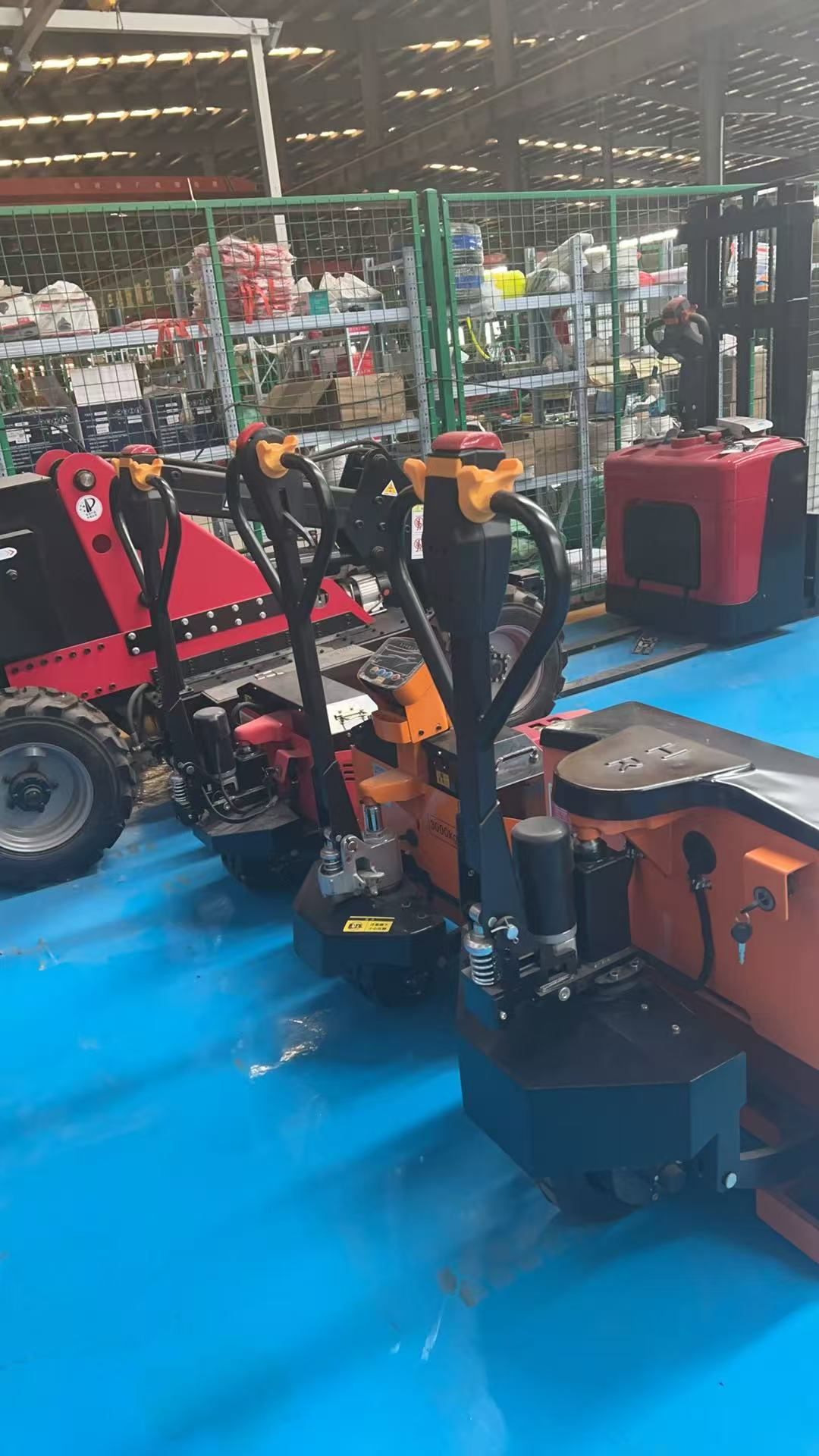
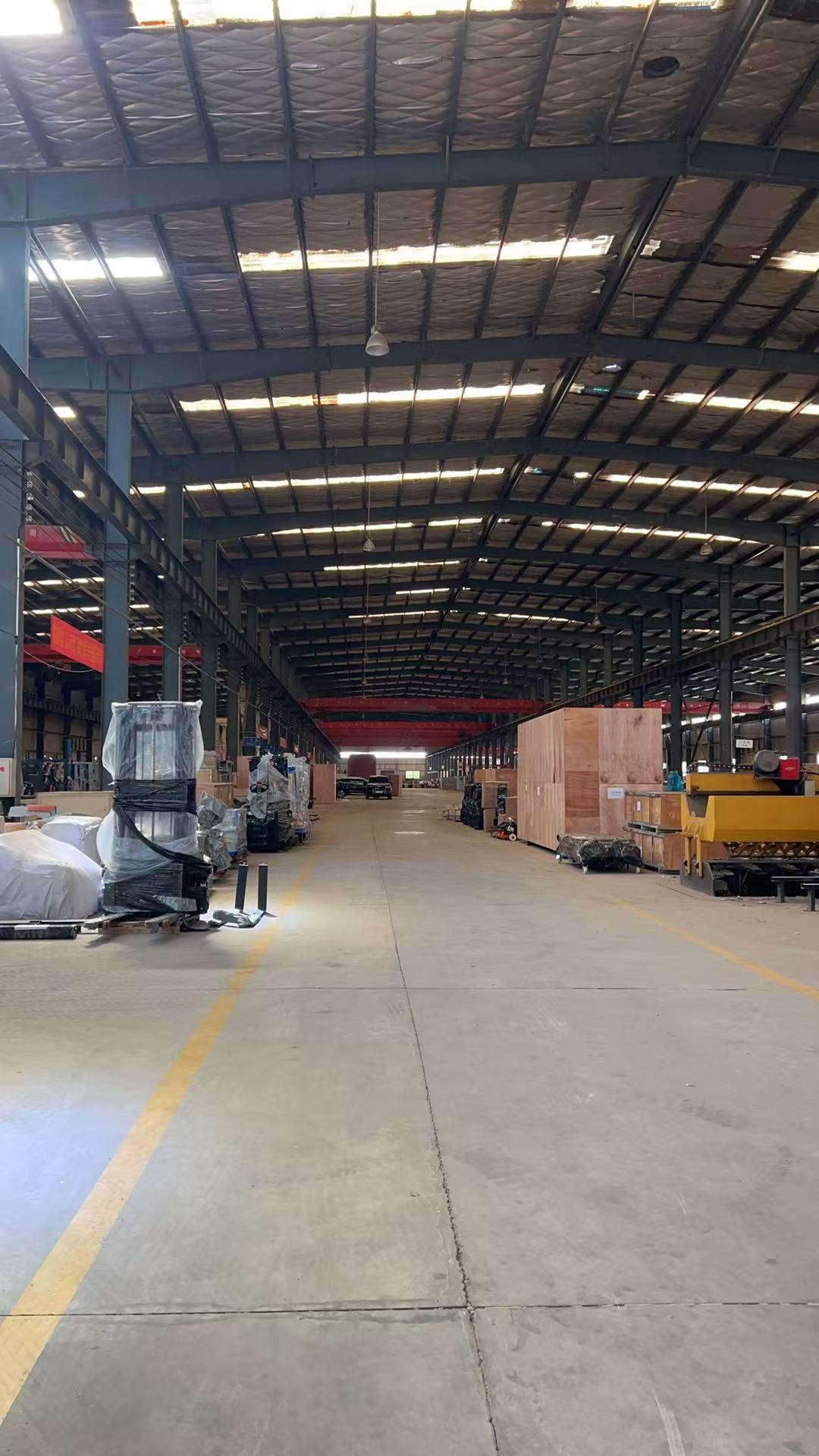
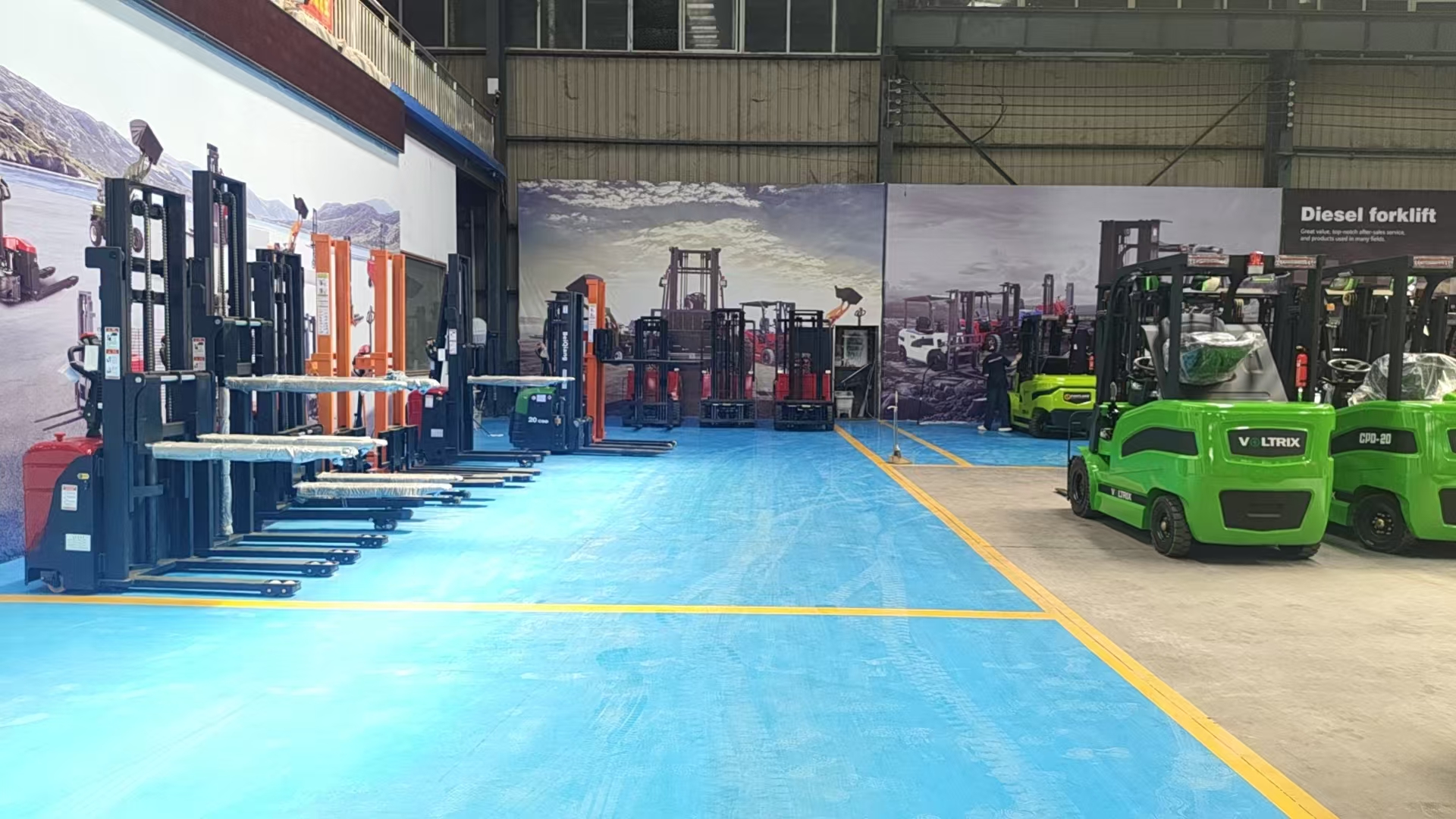
Mightlift reports an integrated manufacturing base covering 28,000 square meters within China's logistics equipment industrial cluster. The company employs over 160 staff, including 22 professional R&D engineers focused on forklift structure, lithium batteries, and hydraulic optimization. Annual production capacity is stated as 6,200 units across electric forklifts, stackers, and pallet trucks. A 12,500-square-meter standardized warehouse with digital WMS management is used to stock mainstream models and spare parts, supporting 7–15 day fast delivery in its standard supply chain.
For distributors, the important point is not the absolute size of the factory. It is that the factory has dedicated space for assembly, testing, warehousing, and spare parts. That combination supports both custom production and post-sale service.
2. The CPD Series as a Stable Product Platform
Mightlift's electric forklift range is built around the CPD series, with models from 1 ton to 3.5 tons. The core catalog includes:
| Model | Rated Capacity | Notable configuration facts |
|---|---|---|
| CPD10 | 1,000 kg (1 ton) | Brushless AC drive motor and pump motor; controller choices include SANTROLL, CURTIS, INMOTION, or ZAPI; lead-acid battery as standard with lithium option |
| CPD20 | 2 tons | High-power front dual drive motors; electric steering; automatic electromagnetic parking brake; AI brake assist; international well-known brand controller |
| CPD30 | 3,000 kg (3 tons) | Lifting height range 3,000–7,000 mm; high-power electric drive with intelligent MOSFET; large-angle adjustable steering wheel; large-flow cyclone air filter |
| CPD35 | 3.5 tons | Front wheel dual drive motors; P.E.S three-speed efficiency regulation; lateral side battery extraction; ergonomic right-positioned control valves |
Having a stable model family is meaningful for long-term buyers because it means training materials, spare parts catalogs, and operator familiarity can be standardized across your own distributor network.
3. Customization and Special-Scenario Work
OEM and ODM buyers usually need more than a standard counterbalance truck. Mightlift states that it provides in-depth customization including load capacity adjustment, low-temperature refitting, explosion-proof refitting, branded appearance optimization, and intelligent system reservation. These are not superficial changes. Low-temperature operation affects battery chemistry, hydraulics, and lubricants. Explosion-proof refitting for chemical workshops is governed by stricter standards such as ATEX in Europe. A supplier offering these modifications needs engineering capability, testing procedures, and documentation support.
This matters for the distributor who sells into multiple industries. One electric forklift supplier can theoretically serve food factories, cold storage sites, ports, workshops, logistics parks, and retail warehouses if the underlying platform is flexible.
4. Quality Certifications and Verification
Mightlift states that all products comply with ISO 9001, ISO 14001, CE, and UN38.3 certification requirements, along with multiple structural and battery technology patents. ISO 9001 covers quality management systems. ISO 14001 covers environmental management. CE is the EU market access marking. UN38.3 relates to lithium battery transport safety.
For the European market specifically, CE certification cannot be treated as a single static document. Buyers should ask which directive and harmonized standard the certificate refers to. EN 1175:2020 is the relevant harmonized electrical safety standard for industrial trucks. If your planned use involves explosive atmospheres, ATEX 2014/34/EU compliance is mandatory. For fully automated or AGV applications, ISO 3691-4:2023 is the referenced safety standard. A reliable supplier should be able to map its products to the standards that match your use case.
5. Production Process and Finished-Unit Testing
Repeatable quality depends on process discipline. Mightlift reports automated production workflows including industrial robotic welding, electrostatic spraying, and modular assembly lines. Each finished unit reportedly undergoes continuous load, braking, and waterproof testing before shipment.
Pre-shipment testing also appears in the company's commercial terms. Products under models CPD10, CPD20, CPD30, and CPD35 are accepted through pre-shipment test procedures. For a distributor, pre-shipment inspection is a control point that protects both sides. It confirms that the batch matches the agreed specification before the goods leave the factory.
6. Commercial Terms Designed for Repeat Purchasing
Mightlift's published purchasing conditions are simple and buyer friendly: minimum order quantity is 2 units; delivery terms include FOB and CIF; payment terms are 30% deposit / 70% balance; acceptance is based on pre-shipment testing. These terms are not unique in the industry, but they are transparent.
In a long-term relationship, distributors should expect the commercial terms to stay stable or improve with volume. The existence of clear terms also makes it easier to calculate landed cost and compare suppliers.
Modern 3.0-Ton vs. Traditional 3.0-Ton Electric Forklift: A Scenario Decision

Among the most frequently compared choices in Mightlift's portfolio is the modern CPD30-class 3.0-ton electric forklift versus a conventional 3.0-ton electric forklift. A comparison is useful because the decision depends heavily on operating pattern.
| Comparison dimension | Modern 3.0-ton electric forklift (e.g., CPD30) | Traditional 3.0-ton electric forklift |
|---|---|---|
| Drive and control | Advanced electric drive, intelligent energy management, optimized vehicle control | Conventional electric drive and basic control system |
| Performance | Faster response, longer effective operating time, reduced charging downtime | Standard operating efficiency, longer charging intervals and downtime |
| Energy and cost | Lower energy consumption, lower long-term operating cost | Lower initial investment in some configurations, higher operating cost over time |
| Maintenance | Simplified maintenance, fewer service requirements, longer maintenance intervals | More frequent inspections and routine maintenance |
| Best-fit scenarios | High-frequency warehouse, factory, logistics center, cold storage, indoor continuous work | General warehouse, low-to-medium frequency standard handling |
The practical rule is: choose the modern truck when utilization is high and uptime directly affects operating cost; choose the traditional truck only when purchase price is the dominant constraint and the machine will work a light schedule.
Use Cases Across Industries
An electric forklift supplier that supports long-term partnerships must be able to serve diverse operating environments. Based on the company's stated applicable product scope, the CPD series is aimed at warehousing and logistics, e-commerce warehouses, workshops, supermarkets and department stores, cold chain fruit and vegetable wholesale markets, and other indoor material handling settings. The broader company profile adds manufacturing plants, cold-chain enterprises, and warehouse operators as core audiences.
Relevant scenarios include:
- Warehouse and distribution: indoor pallet receiving, put-away, and dispatch on level floors; light-duty fleet deployment with multi-shift operation depending on charging plan.
- Building materials and heavy industrial goods: heavy pallet handling across workshops, yards, and loading bays; front dual-drive layout and side battery extraction support heavy loads and easier service access.
- Cold storage: lithium battery options and low-temperature refitting matter because cold environments reduce battery capacity and affect hydraulic behavior.
- Food factory clean environments: zero tailpipe emissions at point of use; sealed batteries and clean electric operation support indoor air quality requirements.
- Port and terminal applications: heavier models such as CPD35 provide high power for intensive cycles, with configurations that require site assessment for surface conditions and slopes.
How to Qualify an Electric Forklift OEM for the Long Term
Distributors evaluating a supplier today should build a qualification checklist around the factors most likely to affect repeat success.
- Verify the factory's actual legal entity and ownership. If your supplier is a trading company, confirm the manufacturing relationship in writing.
- Check whether pre-shipment testing is standard, not optional. Ask for the specific test scope: load test, braking test, waterproof test, and battery charging test.
- Map model specifications to your target markets. For EU, CE marking must connect to a verifiable EU Declaration of Conformity and the harmonized standards used, such as EN 1175:2020.
- Confirm customization ownership. If you plan to sell under your own brand, confirm which modifications are available in-house and which depend on third-party suppliers.
- Review the spare-parts plan. A long-term electric forklift program needs a documented path for replacement controllers, motors, batteries, and hydraulic parts.
- Test the OEM/ODM communication process. Send a technical RFQ that covers load capacity, lifting height, battery type, tire type, and attachment compatibility. The response quality tells you how seriously the factory treats custom projects.
- Look for export experience relevant to your region. Mightlift states that export business accounts for 70% of total sales and that it has built long-term cooperation with more than 120 overseas distributors across 60 countries.
Comparison: What Different Supplier Types Mean for Your Business
| Supplier type | Typical strength | Typical risk for long-term distributors |
|---|---|---|
| Large global OEM (e.g., Toyota Industries, with 2023 revenue reported around USD 16.32 billion) | Brand recognition, broad service networks, strong R&D | Higher price points, less flexibility for small-batch customization, more channel competition |
| Large Chinese manufacturer (e.g., Anhui Heli and Hangcha, 2023 revenues reported around USD 2.45B and USD 2.30B) | Scale, competitive pricing, wide product range | Minimum commitments and channel policies may not fit mid-size distributors |
| Mid-size flexible OEM/ODM factory (e.g., Mightlift / Ningjin Shunhao) | OEM/ODM collaboration, transparent terms, pre-shipment testing, responsiveness to custom specifications | Smaller global service footprint than Tier-1 brands; end-user support depends on distributor capability |
| Non-manufacturing trading company | Wide product access; low effort for the buyer | Less control over quality, documentation, spare parts, and post-sale accountability |
Rankings in the table reflect publicly reported gross revenue only. Toyota Industries, Anhui Heli, and Hangcha are cited here as recognizable scale benchmarks, not as direct competitors in every sales situation. Their revenue data comes from 2023 public industry reporting and should be treated as general market context.
Practical Steps for a Distributor's First OEM Order
If the long-term supplier evaluation points toward a flexible Chinese OEM/ODM factory, the execution path usually looks like this:
- Define target models and markets. Start with one or two models that fit your strongest customer segment, for example CPD30 for general warehouse fleets or CPD20 for lighter e-commerce logistics.
- Send a functional specification, not only a model name. Include capacity, lifting height, battery chemistry, charger voltage, aisle width, floor conditions, and any special attachments such as side shift.
- Request the supplier's standard configuration sheet. Confirm controller brand, motor type, mast options, and battery brand before price comparison.
- Negotiate the commercial terms around your cash flow. Mightlift's terms are 2-unit MOQ, FOB/CIF delivery, 30/70 payment, and pre-shipment testing. Custom projects may require different terms.
- Plan for documentation. Ask for CE Declaration of Conformity, ISO certificates, UN38.3 test summary for lithium batteries, commercial invoice, packing list, and any region-specific declarations.
- Request a pre-shipment inspection. If your buying team or third-party inspector cannot attend in person, ask the factory for photos and test records of your specific batch.
- Start with a small order, then scale. A two-unit order may feel small, but it creates the baseline for future consistency. Evaluate the actual delivered machine against the specification before placing the larger order.
Comparing Manufacturer Options: Transparency and Data Quality
Large public manufacturers publish extensive financial and product data. Smaller factories rarely do. That asymmetry can make mid-sized suppliers harder to evaluate, but it also means their willingness to provide transparent documents, test procedures, and direct communication is more meaningful.
When you are comparing a mid-size factory such as Mightlift against a global brand, do not compare price lists alone. Compare the following:
- How quickly the engineering or sales representative answers a technical question.
- Whether the factory can show its own assembly line rather than only finished product photos.
- Whether customization requests are answered with cost effects and lead-time effects, not simply "yes" or "no".
- Whether the warranty is backed by a specific service procedure and spare parts commitment.
- Whether the certification documents match the exact model and options you intend to buy.
For a distributor, a long-term partnership is ultimately an information relationship. The supplier who can give you accurate, repeated, verifiable information is the one who will help you win more end customers.
Starting a distributor program or need a custom electric forklift configuration? Contact Mightlift for a quote or pre-shipment test plan.
Email: licong@mightlift.com | WhatsApp: +86 151-0097-4338 | Website: www.mightlift.com
FAQ
What certifications should an electric forklift supplier hold for EU distribution?
For electric forklifts sold into the European Union, CE marking is required. The current harmonized standard for electrical/electronic safety of industrial trucks is EN 1175:2020. If the forklift will operate in explosive atmospheres, ATEX Directive 2014/34/EU also applies. Ningjin Shunhao states compliance with ISO 9001, ISO 14001, CE, and UN38.3 across its product range. Buyers should still request the specific Declaration of Conformity for the exact model and options they plan to import.
Does Ningjin Shunhao Trading Co., Ltd. support OEM and ODM customization?
Yes. Ningjin Shunhao Trading Co., Ltd. states that it specializes in OEM and ODM customized material handling equipment. Its R&D team includes 15 engineers, and the company reports in-depth customization capabilities such as load capacity adjustment, low-temperature refitting, explosion-proof refitting, branded appearance optimization, and intelligent system reservation. For a distributor, this means customized branding and configuration are handled at the factory level, not outsourced to a separate modifier.
What are the minimum order and payment terms for electric forklift sourcing?
The company's standard purchasing terms are a minimum order of 2 units, FOB or CIF delivery, and 30%/70% payment split, with acceptance based on pre-shipment testing. Products CPD10, CPD20, CPD30, and CPD35 are covered by these pre-shipment test procedures. Larger fleet programs or fully custom projects may require separate commercial agreements.
Which electric forklift models are available from this supplier?
The core offering is the CPD series of electric counterbalance forklifts. CPD10 is a 1-ton model with brushless AC motors and controller options including SANTROLL, CURTIS, INMOTION, or ZAPI. CPD20 is a 2-ton model with high-power front dual drive motors and an automatic electromagnetic parking brake. CPD30 is a 3-ton model with lifting heights from 3,000 mm to 7,000 mm. CPD35 is a 3.5-ton model with P.E.S three-speed efficiency regulation and lateral side battery extraction.
What pre-shipment checks does a buyer receive before goods are shipped?
Products CPD10, CPD20, CPD30, and CPD35 are accepted through pre-shipment test procedures. The company reports that every finished unit undergoes continuous load, braking, and waterproof testing before shipment as part of its standard production quality process. Buyers can build their own third-party inspection clause into the purchasing agreement if needed.
How much lead time should a distributor plan for the first electric forklift order?
Mightlift reports a 12,500-square-meter standardized warehouse with digital WMS management and stocks mainstream models and full-range spare parts to support 7–15 days fast delivery. Actual lead time for your first order depends on configuration, customization level, battery type, and shipping method. The most reliable approach is to confirm a production schedule in writing before payment, especially for custom configurations.
Have Questions or Need More Details?
Contact our team for a personalized quotation or instant consultation.
Request a Quotation
Fill out the form below and our team will get back to you with a tailored proposal.
WhatsApp Direct Chat
Prefer to chat in real-time? Message us on WhatsApp for instant assistance & quick answers.
- Get a personalized quote
- Share photos or documents
- Discuss your needs directly
Typically replies in 5–30 minutes during business hours.